

VIDEO REVIEW

I'm Peter (G3OJV) and I took the Yaesu FTX‑1 Field out for a first proper portable session. After a few weeks with the Optima version at home, I removed the front panel and packed the FTX‑1 Field for some QRP operation from my camper van. Here’s a practical, hands‑on write up of what I used, how I set it up, how it performed on 20 metres, and a few tips for anyone thinking of taking this rig outdoors.
What I took with me
- Yaesu FTX‑1 Field (control head separated from the amp on the Optima)
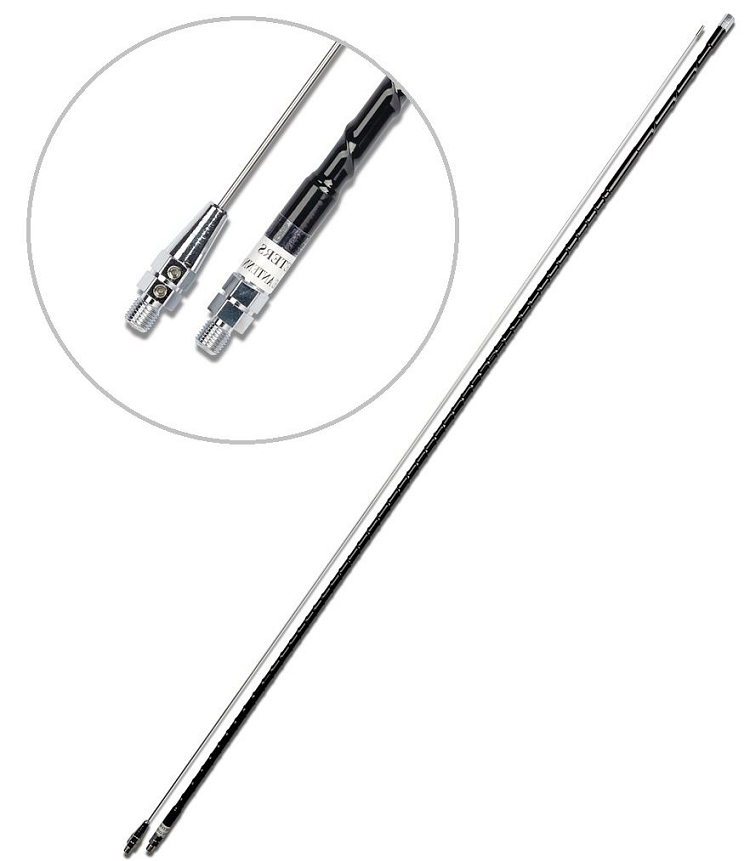
- Ampro 20 m mobile whip (cheap, two‑part design — easy to pre‑tune and reassemble)
- SO239 to 3/8" converter to mount the whip on a vehicle SO239 point
- Old helicopter bag to store the radio and battery (compact and protective)
- Paddle key on a wooden base (lightweight) and a tiny MFJ key for occasional use
- 6.3 Ah battery (FTX‑1 internal battery life impressed me)
- Power supply in the van (also powers a coffee machine — essential!)
Quick and easy installation
The Ampro whip mounts conveniently to a vehicle SO239. With a simple SO239 to 3/8" adapter I could screw the whip on firmly and be ready to go. The radio stores neatly in my camera/helicopter bag with the battery attached, so it’s very quick to grab-and-go.
Operating setup and bands
I ran the rig at 5 watts on 20 metres for most of the session. The FTX‑1 is capable of 6 W QRP output, but reducing to 5 W saves battery and is nearly indistinguishable in performance. I used a short whip only — surprising how much you can do with modest power and a resonant antenna.
Checking VSWR and matching options
To check antenna match I selected the transceiver’s VSWR meter and used AM for a steady carrier. With the whip resonant around the middle of the 20 m band I saw VSWR around 1.2–1.3:1, rising toward 1.8–1.9:1 near the phone end. Even near those higher figures the transceiver still delivered full power without an internal matching unit.
A few practical notes on matching and protection:
- The FTX‑1 Field has no internal ATU, but clip-on and remote ATU options are available (the FC‑80 clip‑on ATU and the remote FC‑90 end‑fed ATU).
- I mostly use resonant antennas, so I didn't need an ATU for this trip. If you plan to use end‑fed wires or non‑resonant feeds, the optional ATUs are a good investment.
- Modern rigs are tolerant of modest VSWR — around 2:1 is typically the point where transmitted power begins to drop noticeably. The FTX‑1 coped well with the modest mismatches I gave it.
CW performance — excellent selectivity and break‑in behaviour
If you like CW you’ll enjoy this transceiver. The receiver is quiet, and the selectivity can be tightened right down so you can pull weak signals out of the noise. I worked several CW stations during the morning, including a weak German station that was running only 1 W; with selectivity narrowed I copied him fine while I was on 5–10 W.
On break‑in: the radio supports semi‑break‑in reliably. Full break‑in is possible but there’s a changeover click you can hear — I prefer a 200–300 ms delay before switching back to receive, which works well for me. Overall, the FTX‑1 is a delight for low‑power CW portable ops.
Receiver noise, audio and FM/VHF use
The receiver noise floor on the FTX‑1 is impressively low — a real pleasure when operating from low‑noise portable locations. The audio is good and the radio has plenty of receive sensitivity.
On FM the DX button is very effective: it acts like a noise‑reduction/NR mode and can make a noisy FM channel sound much quieter — I’d estimate it gives the equivalent of a several dB improvement in effective signal clarity. That makes FM simplex and repeater work more comfortable when mobile. The rig also covers VHF 2 m and 70 cm and includes AM aircraft band monitoring — handy at airshows or when you’re near an airfield.
Practical vehicle mounting and separate antenna ports
I tried a couple of mounting positions in the camper van: a shelf above the glove box and a top dash shelf. The control head fits neatly and is easy to access. One particularly handy feature is the FTX‑1 Field’s separate antenna ports for HF and VHF — no duplexer required, so you can leave both antennas connected at once.
Battery life and power handling
The internal 6.3 Ah battery on the Field version is outstanding. After a morning of receive time and around 10–12 QSOs the battery indicator was still near full. If you’re planning a day’s portable activity, don’t worry — the FTX‑1 is very efficient. If you need mains power in the van you can of course use a power supply to run the rig and power accessories like a coffee machine (very important, in my view!).
Menu system — a small UI detail that matters
One subtle design touch I really like is Yaesu’s menu behaviour: when you open the menu the important parts of the display (frequency, S‑meter, power) remain visible and you can still operate. That’s genuinely useful on CW: you can adjust sidetone, speed or other settings without losing sight of the operating frequency or meters.
Summary — how well did the FTX‑1 Field do?
Short answer: it did very well. Highlights for me were:
- Very quiet receiver and strong CW performance with excellent selectivity.
- Impressive battery life from the Field battery pack.
- Practical portability: compact storage, quick setup with a resonant whip, and useful van mounting options.
- Good FM/VHF functionality with a helpful DX/noise reduction button and aircraft band monitoring.
- Optional ATUs (FC‑80 clip‑on and FC‑90 remote) provide matching flexibility if you need non‑resonant antennas.
For QRP field operators who favour CW and want a premium‑feature set in a compact package, the FTX‑1 Field is an excellent choice. It’s feature‑rich compared with many QRP rigs and feels like great value for the capability it packs into a portable form.
Interested in one?
If you want to know more, the rig is available from the UK Ham Radio Store and they do part‑exchange deals. Mention you saw my review and see what offers they can do — you might be pleasantly surprised.
A quick teaser
One last thing — I’ve been sent a reproduction of a Second World War spy radio, painstakingly recreated with identical parts to the original. It was built many thousands of miles away at a secret location and won’t be on general sale, but one example is coming to the UK and another to France. I’ll show it in a dedicated video soon, so stick around for that if vintage/replica gear interests you.
Enjoy your ham radio — and if you’re out portable, bring a warm coat and a good cup of coffee.
For more information please visit our online store or alternatively contact us and our team will be happy to assist you!