


Antenna restrictions are a headache for a great many radio amateurs. In the United States, there are HOA rules. In the UK and across Europe, there are small gardens, planning concerns, neighbour complaints, and all sorts of practical limitations on what can and cannot go up outside the house. It is all rather unfortunate, because if you want to operate on HF, you do rather need an aerial.
The good news is that there is a simple way of getting back on the air with a respectable 20 metre setup that is inexpensive, effective, and discreet. Better still, it does not rely on putting an antenna on your house or in your garden at all.
The basic idea is this: use a compact mobile HF antenna on the roof of your car, park the car outside the house, and run coax back indoors to the transceiver. Done properly, this gives you a genuine stealth antenna system that can work DX surprisingly well.
Why this stealth antenna approach works
The clever part of this system is not that it is invisible. It is that it is legitimately separate from the property. If the antenna is mounted on the vehicle, and the vehicle is parked outside the house, then you are not putting up a conventional fixed aerial on the home itself.
That makes this approach particularly attractive if you:
- Live under antenna restrictions
- Have a very small garden
- Need something temporary and easy to remove
- Want HF capability without erecting a full-size vertical or wire antenna
It is a practical workaround, and one that can produce rather better results than many people might expect.
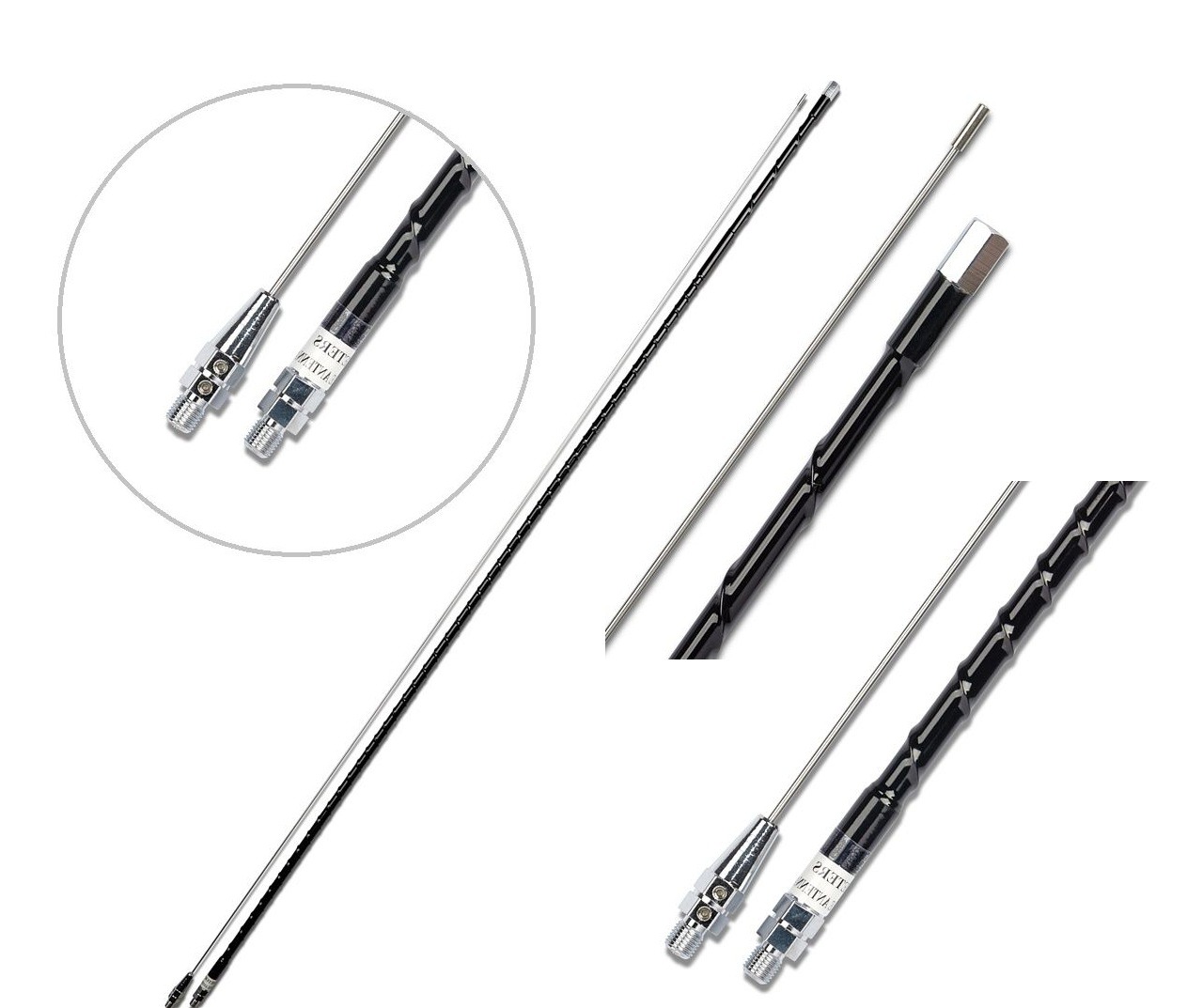
The antenna: a compact helically wound mobile HF vertical
The antenna used here is an Empire mobile HF antenna. It comes in two sections:
- A lower helically wound section
- An upper whip section used to bring the antenna to resonance
The whip screws into the top of the loading section, and the overall length is roughly 7 to 7.5 feet. That is long enough to be useful on 20 metres, but still manageable enough to put up and take down without much fuss.
One particularly useful feature is that the whip is adjustable. You can slide it in or out and secure it with Allen screws, which allows the antenna to be pre-tuned for the part of the band you want to use. Because it breaks down into two pieces, it is also easier to store away when not in use.
Why a helically wound antenna is better than a basic base-loaded whip
Not all shortened mobile HF antennas perform the same, and this is where the helical winding matters.
A traditional base-loaded antenna uses a lumped inductor near the bottom of the whip. That arrangement is convenient, but it is not especially efficient. Compared with a full-size vertical, a base-loaded antenna might only deliver around 15% to 20% efficiency if you are lucky.
Put another way, if you run 100 watts into that sort of antenna, you may only be radiating 15 to 20 watts effectively.
A helically wound antenna improves on that considerably. Because the loading is distributed over a longer section of the antenna rather than concentrated in one small coil at the base, the efficiency climbs. In this case, the estimate is around 50% to 60% efficient compared with a full-size vertical.
That is a significant gain for an antenna only about half the size of a full quarter-wave vertical for 20 metres.
In practical terms:
- 100 watts into a poor base-loaded antenna may radiate only 15 to 20 watts effectively
- 100 watts into this helically wound mobile antenna may radiate more like 50 to 60 watts effectively
In dB terms, that puts it only about 3 dB down on a full-size antenna, which is actually quite respectable for a compact stealth solution.
Why mounting height matters
Many vertical antennas are simply mounted at ground level, but that is rarely where they perform best. It is well established that a vertical works better when it is raised a few feet above ground and used with radials.
Raising a vertical by 3, 4, or 5 feet and giving it even a modest radial system can produce a worthwhile improvement, on the order of about 3 dB. You do not necessarily need dozens of radials for a noticeable benefit.
This is where the vehicle roof becomes very useful.
Why a car roof makes a good HF ground plane
Mounting the antenna on the roof of a vehicle does two important things:
- It raises the antenna above ground level
- It provides a substantial metal surface that acts as a compact elevated ground plane
With a vehicle, you do not need to add separate radials in the usual sense. The metal body of the car serves as the counterpoise. It is not a perfect substitute for a classic radial field, of course, but it is very effective for this sort of setup.
In fact, the vehicle itself contributes to radiation, so the whole arrangement becomes a more efficient system than a small loaded vertical stuck in the garden at ground level.
Combine the efficiency of the helically wound antenna with the performance advantage of mounting it on a car roof, and you begin to get surprisingly close to the real-world performance of a much larger antenna.
Why 20 metres is the sweet spot
This system is particularly attractive on 14 MHz, the 20 metre band.
There are several reasons for that:
• 20 metres is often open for long periods, especially in summer
• It offers good DX opportunities
• The antenna length is a reasonable compromise for the band
• The mobile antenna can be tuned effectively without requiring an ATU
On 20 metres, a 7.5 foot helically wound antenna is not ideal in the full-size sense, but it is perfectly usable and efficient enough to be worthwhile.
17 metres should also work very nicely, as it is often a productive band. By contrast, 40 metres is much more of a stretch for an antenna this short. It may still tune and radiate, but the efficiency would be much poorer because the antenna becomes a far smaller fraction of a wavelength.
For an easy stealth HF solution, 20 metres is probably the best band to target.
The physical setup
The arrangement itself is refreshingly simple.
What you need
- A compact mobile HF antenna such as the Empire helically wound type
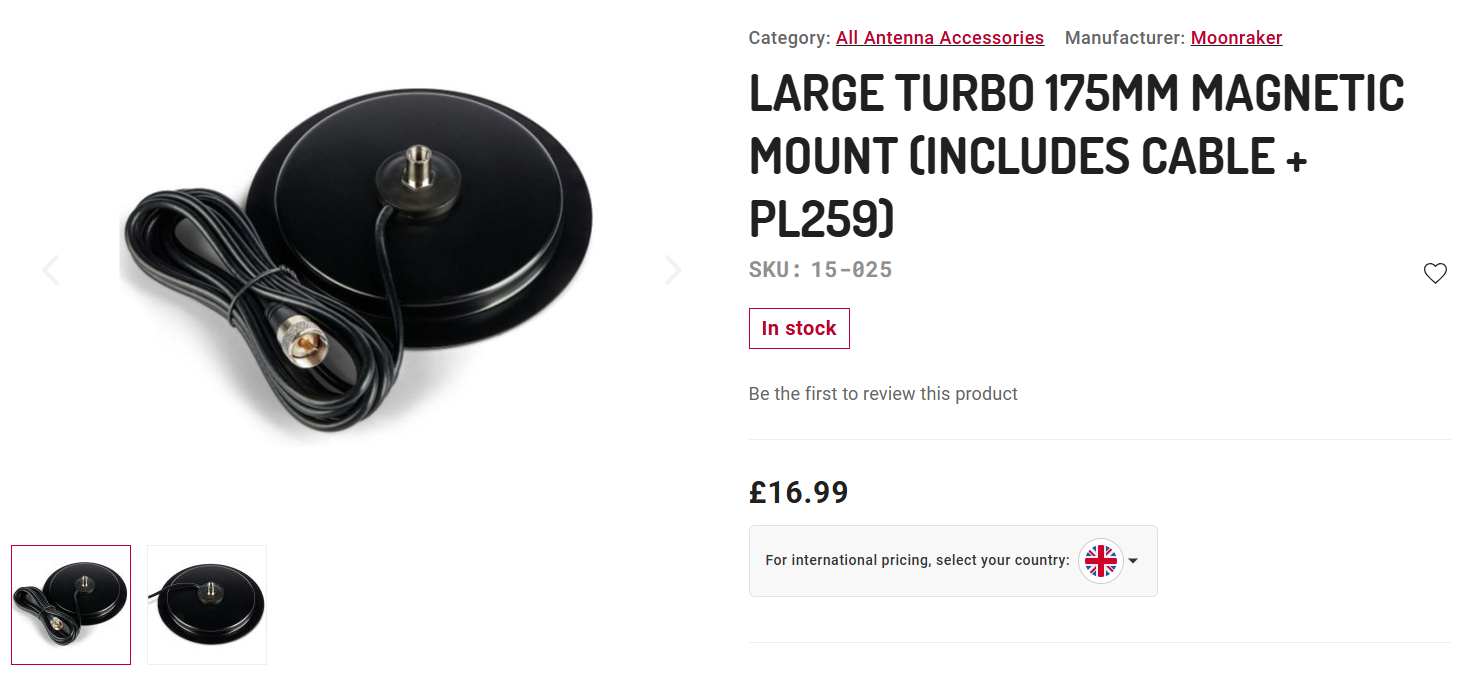
- A magnetic mount
- Coaxial cable
- A line isolator or choke
- An HF transceiver indoors
How to install it
- Mount the antenna on a magnetic base on the car roof
- Place the mag mount as close to the centre of the roof as possible for best performance
- Run the coax from the mag mount into the house through the nearest window
- Connect it to the transceiver indoors
- Check resonance and SWR, then adjust the whip if needed
That is all there is to it. The car stays outside, the radio stays indoors, and you can operate in comfort even in poor weather.
Use a good mag mount
One detail that is worth paying attention to is the quality of the magnetic mount.
A good mag mount with a thin membrane or rubber layer on the bottom gives better capacitive coupling to the metal roof of the vehicle. That capacitance forms the RF return path, effectively the earth side of the antenna system.
A Diamond mag mount is a good example of the sort of thing that works well. If the magnetic base has a thick rubber boot or a heavy insulating layer, the capacitance to the vehicle is reduced, and so is performance.
It is one of those cases where spending a bit more on the mounting hardware is absolutely worthwhile.
Do not forget the line isolator
A line isolator or choke on the feedline is also a sensible addition. It helps reduce unwanted RF flowing back on the outside of the coax, which can otherwise upset the pattern and lead to losses or unpredictable behaviour.
It does not need to be elaborate, but it should be neatly done and suited to the band in use. A rough-and-ready choke may work, but a tidy, tightly wound one is better practice.
Tuning the antenna for 20 metres
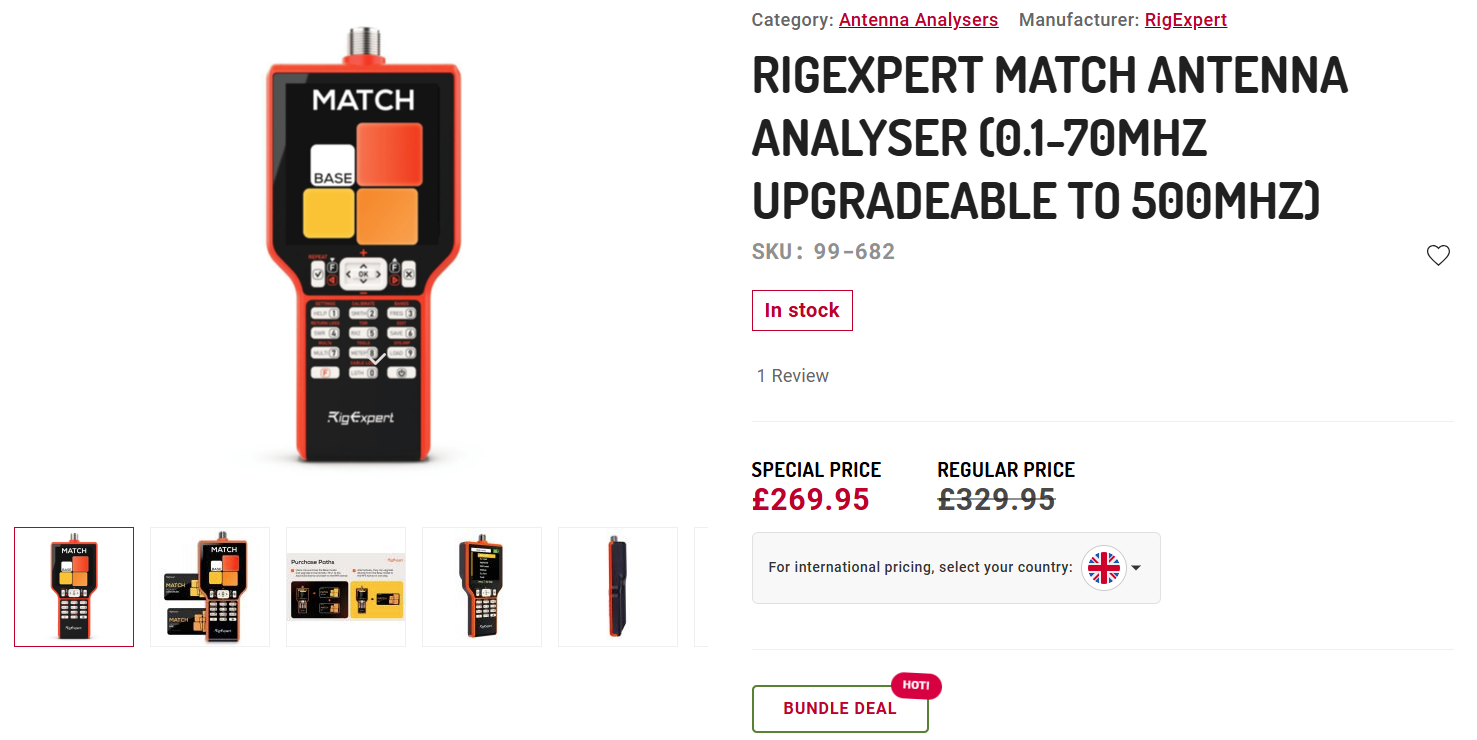
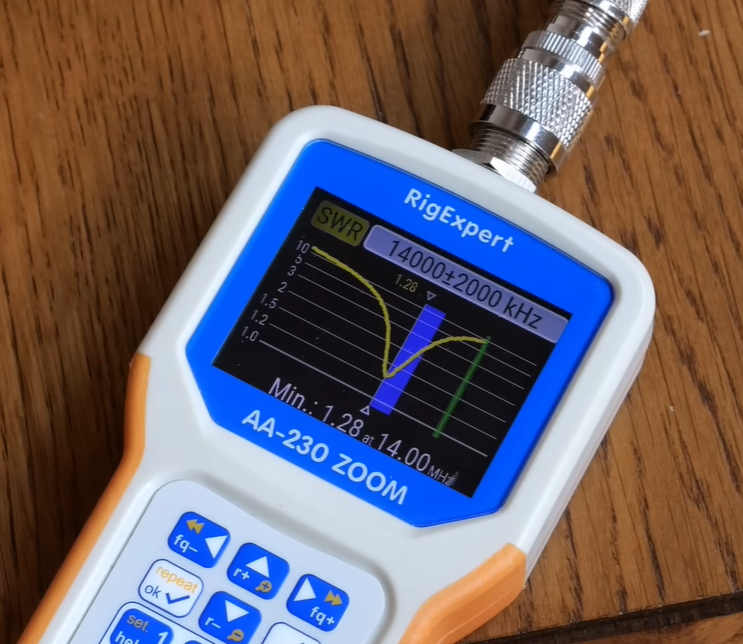
Because the antenna is adjustable, it can be pre-tuned to the part of the band you want to use. An antenna analyser makes this straightforward.
In the test setup, the antenna was checked with a RigExpert analyser and brought into resonance near the bottom end of the 20 metre band. That gave a suitable match for operation without any antenna matching unit.
This is another advantage of the system. If the antenna is set up properly, you can connect small portable rigs directly to it.
QRP-friendly and no ATU required
One of the nicest things about this 20 metre stealth antenna arrangement is that it is very friendly to low-power operation.
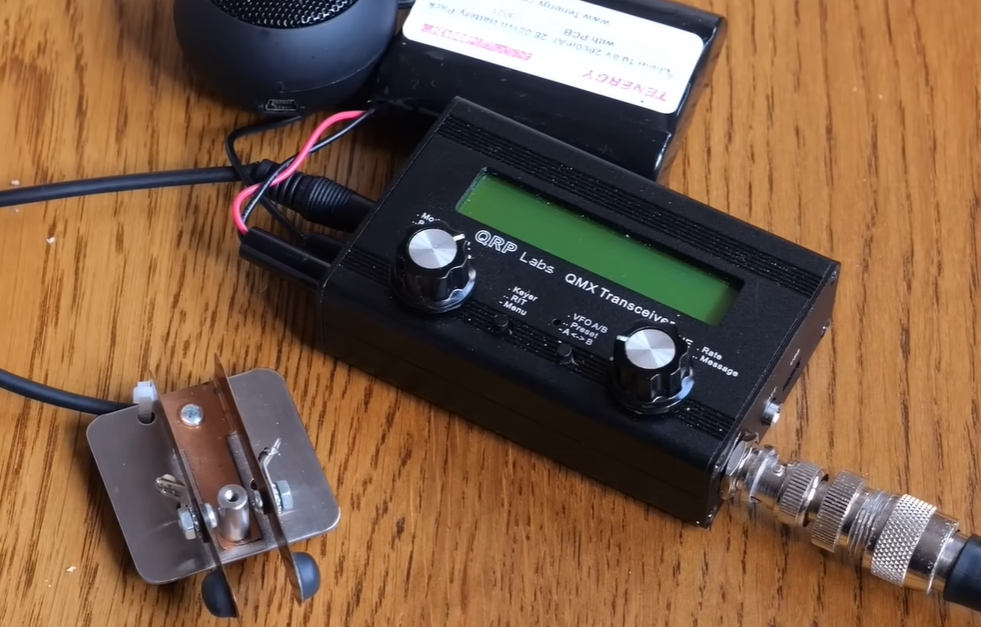
If you use a compact transceiver such as:
- Yaesu FT-817
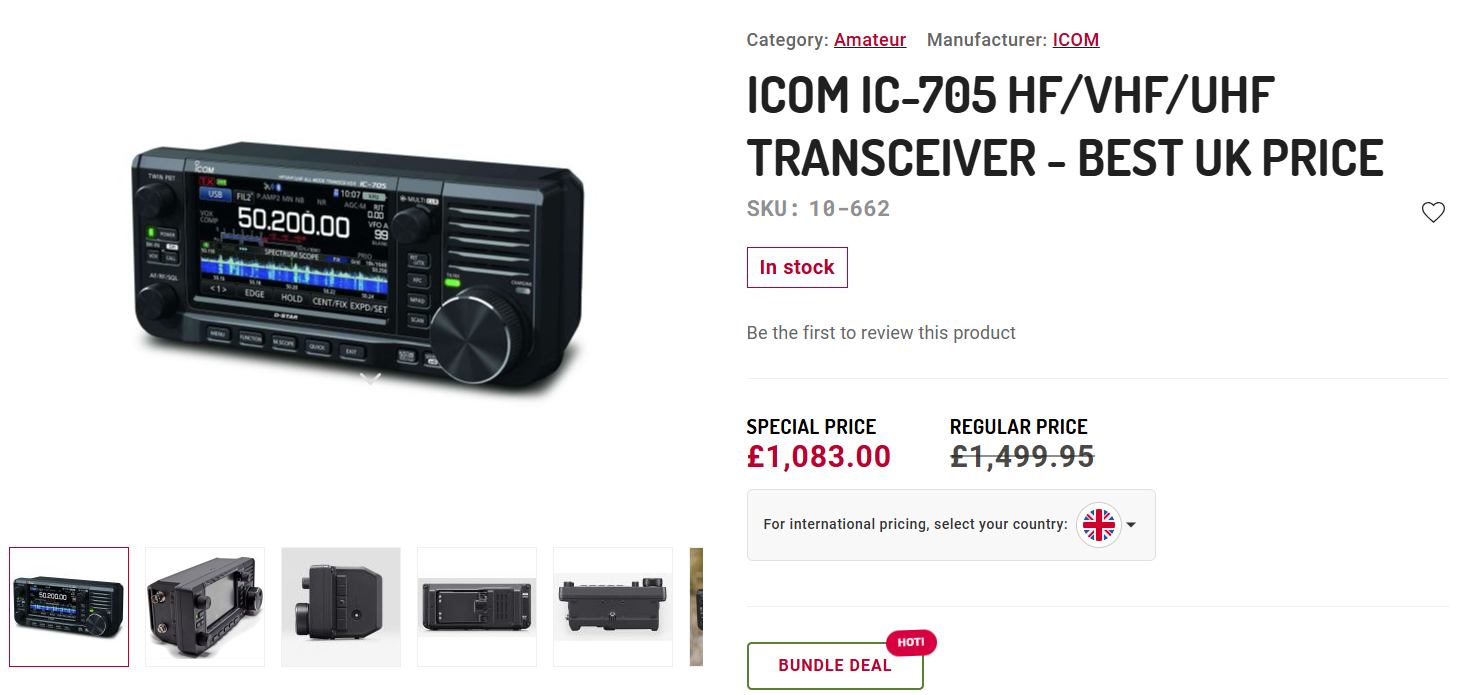
- Icom IC-705
- QMX-class QRP radio
you can simply plug the rig straight into the antenna system with no external ATU required, provided the antenna has been tuned correctly.
On internal battery or low-power output, 5 or 6 watts is enough to have some fun. With a 12-volt supply into radios like the FT-817 or IC-705, 10 watts becomes available, which makes the system even more capable.
Real-world test results with just 4 watts
This is not merely a theoretical exercise. The setup was tested on 20 metres using a QRP transceiver running only 4 watts.
To assess how well the antenna was radiating, CW calls were sent and the results checked on the Reverse Beacon Network. A number of monitoring stations returned perfectly reasonable reports, showing that the antenna was getting out well enough for useful operation.
There was also a successful QSO with Sergio, IT9IFI in Italy, with a received report of 579.
That is a very respectable result for a compact stealth antenna fed with just 4 watts from the UK.
What happens if you run 100 watts?
This is where things become even more interesting.
If 4 watts can produce Reverse Beacon spots and a 579 report into Italy, then a 100 watt station indoors feeding the same antenna should be dramatically stronger. The estimate given was roughly two S-points plus over the 4 watt signal.
So if the low-power setup was earning a 579, a 100 watt station might well be read as 59 or even 59+ under similar conditions.
The antenna itself will handle 100 watts, which makes this a practical option not just for QRP enthusiasts but also for operators wanting a proper home-based HF station despite restrictions.
Why this can solve a real antenna problem
There are a lot of compromised antennas in amateur radio, and many of them are compromises in the wrong direction. They are difficult to install, hard to disguise, awkward to tune, and still perform badly.
This approach has several genuine merits:
- It is discreet because the antenna is on the car rather than fixed to the property
- It is practical because the radio can stay indoors in comfort
- It is effective thanks to the helically wound antenna and the vehicle roof ground plane
- It is affordable compared with elaborate stealth installations
- It works well on DX-friendly 20 metres
For many people, that may be enough to get back on HF after years of thinking it simply was not possible from home.
Best practices for getting the most from it
If you want this sort of stealth antenna system to perform as well as possible, keep these points in mind:
- Mount the antenna in the centre of the car roof whenever possible
- Use a high-quality mag mount with a thin insulating layer underneath
- Add a proper line isolator or choke
- Tune the whip carefully with an antenna analyser
- Target 20 metres first, and consider 17 metres as well
- Do not expect miracles on 40 metres with such a short antenna
- If possible, run a little more power from indoors for stronger results
A stealth HF antenna that is actually worth trying
There is no escaping the fact that a full-size, properly installed antenna is still the gold standard. But not everyone has the luxury of putting one up.
For amateurs dealing with HOA restrictions, planning concerns, small properties, or sensitive neighbours, a mobile HF antenna on the roof of a parked car is a very sensible alternative. On 20 metres in particular, it can be efficient enough to make real contacts, work DX, and restore some enjoyment to the hobby.
If you have been assuming home HF operation is impossible because you cannot erect an aerial, this may be exactly the sort of workaround that gets you active again.
And when a compact 7.5 foot mobile antenna on a car roof can produce solid Reverse Beacon results and a 579 from Italy on just 4 watts, it is hard to dismiss it as merely a compromise. It is a compromise, certainly, but it is one that works.
For more information please visit our online store or alternatively contact us and our team will be happy to assist you.