

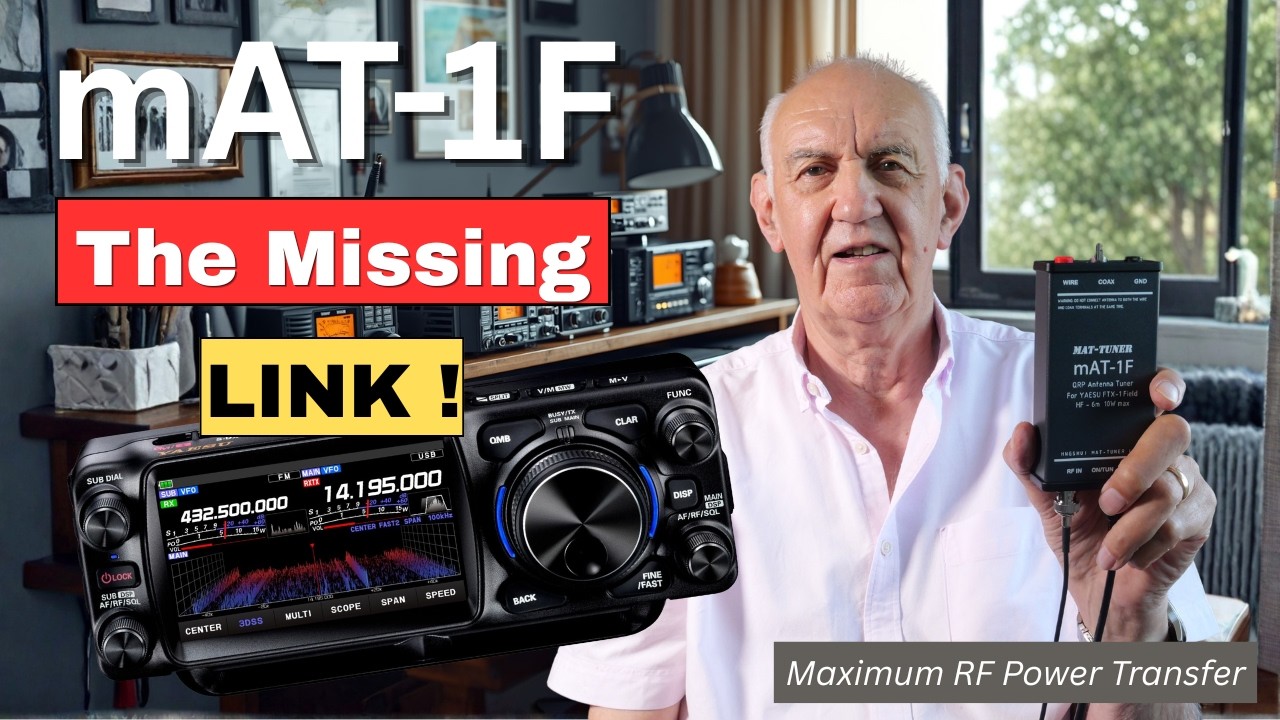
The Yaesu FTX-1 Field is a very appealing portable transceiver, but like several low-power radios, it does not have a built-in ATU. That can be a nuisance when an antenna is not perfectly resonant, particularly when operating portable or trying to make the most of a simple wire antenna.
The mAT-1F automatic antenna tuner is designed specifically for the FTX-1 Field. It is powered and controlled through the radio's accessory socket, covers an impressive claimed range from 160 metres through to 6 metres, and accepts either a conventional coax-fed antenna or an end-fed wire.
After trying it with several very different antennas, I came away rather impressed. It is compact, quick, simple to operate, and it gives the FTX-1 Field the practical antenna-matching flexibility that many portable operators will want.
What Comes with the mAT-1F?
The tuner is supplied with the two leads required to connect it to the FTX-1 Field:
- A BNC signal lead for connection to the transceiver's HF antenna socket.
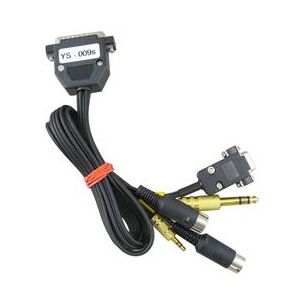
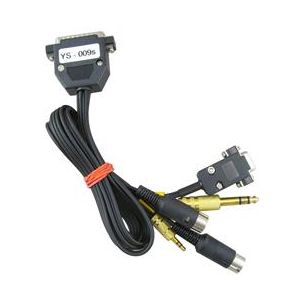
- A multi-pin control cable that connects between the tuner and the FTX-1 Field accessory socket.
The control cable is particularly important. The mAT-1F does not have an internal battery, so it takes its power directly from the transceiver. The same connection also enables the radio to control the tuning process.
That makes for a very neat arrangement. There is no separate power supply to carry, no extra battery to charge, and no need to reach for controls on the tuner when changing bands. Press the tune control on the transceiver and the mAT-1F gets on with the job.
The maximum permitted RF input is 10 watts. That suits the FTX-1 Field very well when it is operating from an external 12 V or 13.8 V supply and delivering its full 10 W output.
Choose from a range of Antenna Tuners at Moonraker:
-
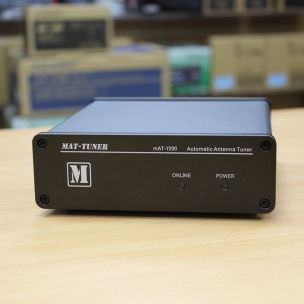 USED mAT-Y200 - Automatic Tuner (For Use with Yaesu)Special Price £161.96 Regular Price £179.95
 -
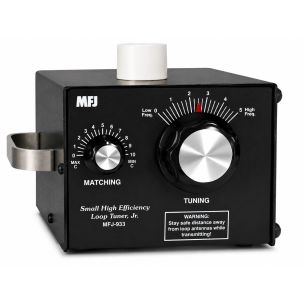 MFJ-933 5.3-29.7MHz LOOP TUNERSpecial Price £227.96 Regular Price £284.95
 -
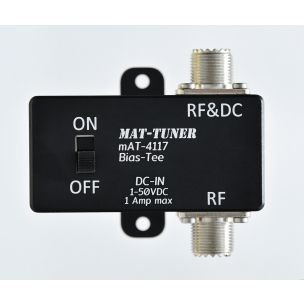 mAT-4117 BIAS-TEE DC power supplySpecial Price £53.96 Regular Price £59.95
 -
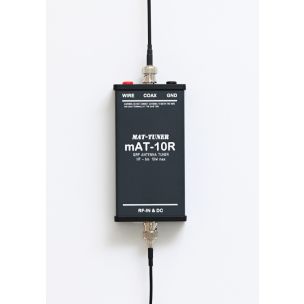 mAT-10R Universal Automatic Antenna TunerSpecial Price £116.96 Regular Price £129.95
 -
 mAT-1F Dedicated Automatic Tuner for Yaesu FTX-1Special Price £107.96 Regular Price £119.95
 -
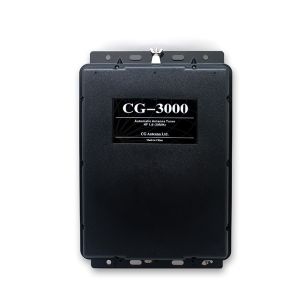 CG-3000 Automatic Antenna TunerSpecial Price £239.95 Regular Price £249.95
 -
 ICOM AH-6 Automatic Antenna TunerSpecial Price £353.40 Regular Price £372.00
 -
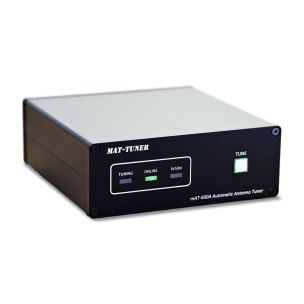 mAT-600a Universal 600W Antenna TunerSpecial Price £314.96 Regular Price £349.95
 -
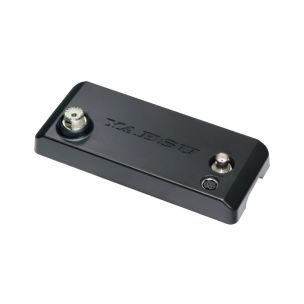 YAESU FC-80 Antenna Tuner for FTX-1 (Plus £45 Cashback From Yaesu UK)Special Price £227.95 Regular Price £239.95
 -
 YAESU FC-90 Antenna Tuner For FTX-1 (Plus £45 Cashback From Yaesu UK)Special Price £225.00 Regular Price £279.95
 -
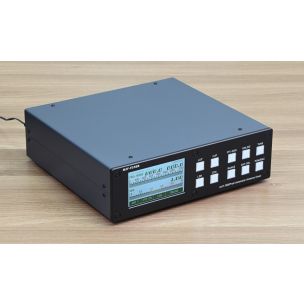 mAT 1500PROII High Power Automatic Antenna TunerSpecial Price £629.96 Regular Price £699.95
 -
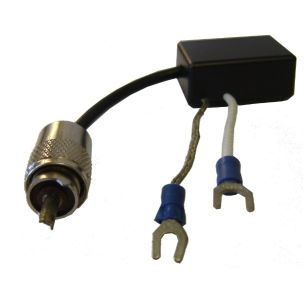 Watson WMT-2 Mobile matching transformerSpecial Price £18.86 Regular Price £20.95
 -
 YAESU VCT101 VC-Tune unit (sub FTDX101D)Special Price £246.95 Regular Price £259.95
 -
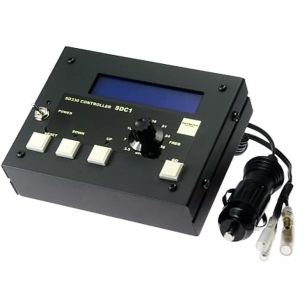 DIAMOND SDC-1 SDC-1 Tuning control for SD330 antennaSpecial Price £199.95 Regular Price £249.95
 -
 LDG K-OTT Kenwood One-Touch-Tune Interface,Special Price £67.46 Regular Price £74.95
 -
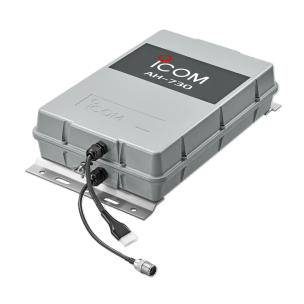 Icom AH-730 - Automatic Antenna TunerSpecial Price £499.95 Regular Price £549.95
 -
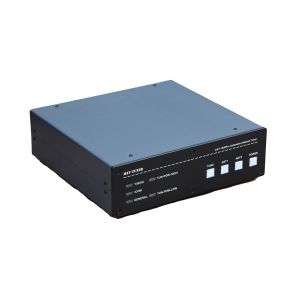 mAT-1500Pro - High Power Automatic Antenna Tuner - Upgraded VersionSpecial Price £494.96 Regular Price £549.95
 -
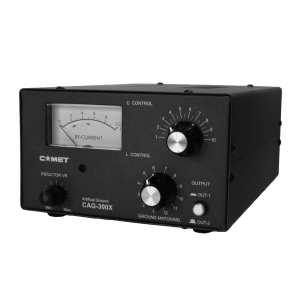 Comet CAG-300X - Artificial RF GroundSpecial Price £197.96 Regular Price £219.95
 -
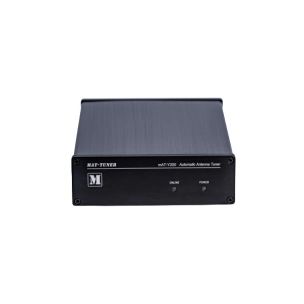 mAT-Y200 - Automatic Tuner (For Use with Yaesu)Special Price £206.99 Regular Price £229.99
 -
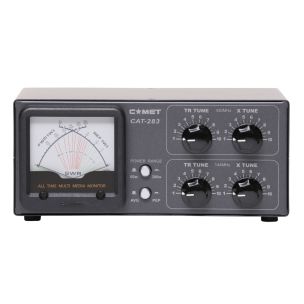 COMET CAT-283 - Antenna Tuning Unit 144/430MHz, 250W (PEP)Special Price £224.96 Regular Price £249.95
 -
 COMET CAT-10A - Mobile QRP Antenna Tuner 3.5-50MHzSpecial Price £125.96 Regular Price £139.95
 -
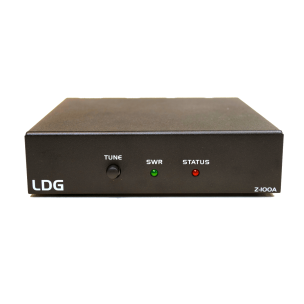 LDG Z-100A Automatic Antenna Tuner (Includes all interface leads)Special Price £179.96 Regular Price £199.95
 -
 mAT-M200 - Automatic Antenna Tuner (ICOM)Special Price £199.95 Regular Price £229.95
 -
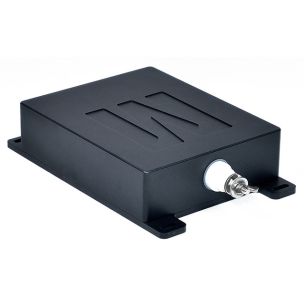 mAT-40 Automatic Antenna TunerSpecial Price £219.95 Regular Price £249.95
 -
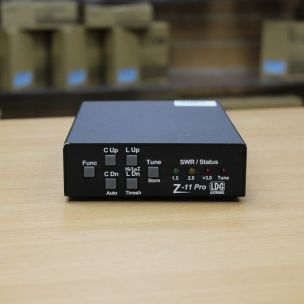 USED LDG Z-11 PRO II - Automatic Antenna TunerSpecial Price £134.96 Regular Price £149.95
 -
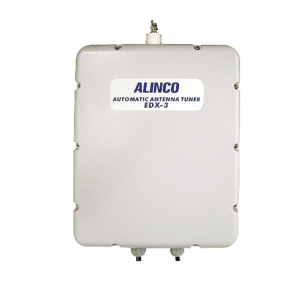 Alinco EDX-3 - Automatic Antenna TunerSpecial Price £269.99 Regular Price £299.99
 -
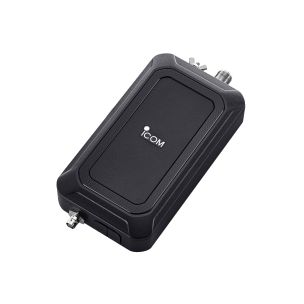 ICOM AH-705 HF/50 MHz Automatic Antenna TunerSpecial Price £284.99 Regular Price £299.99
 -
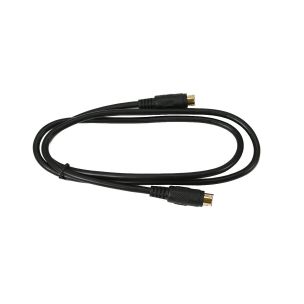 mAT-CY Control Cable For mAT-30 & mAT-10Special Price £17.99 Regular Price £19.99
 -
 mAT-705 Plus Automatic Tuner (Designed for ICOM IC-705)Special Price £161.96 Regular Price £179.95
 -
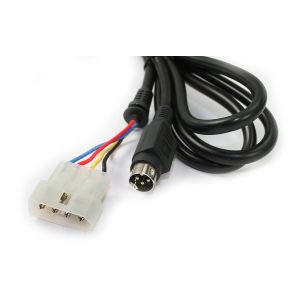 mAT-CI ICOM Control Cable For mAT-k100 & mAT-180HSpecial Price £17.99 Regular Price £19.99
 -
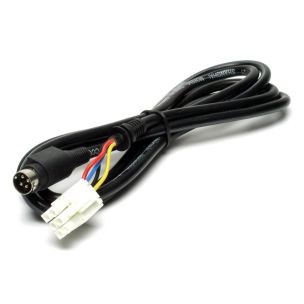 mAT-CK Kenwood Control Cable For mAT-K100 & mAT-180HSpecial Price £17.99 Regular Price £19.99
 -
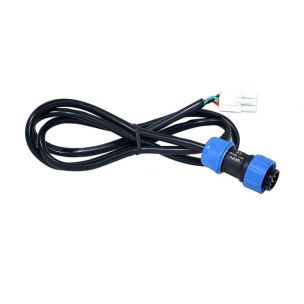 mAT-40-K Kenwood interface cable for mAT-40Special Price £17.99 Regular Price £19.99
 -
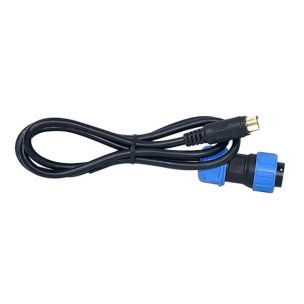 mAT-40-Y Yaesu interface cable mAT-40Special Price £17.99 Regular Price £19.99
 -
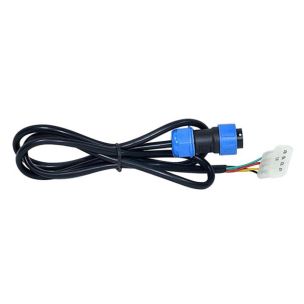 mAT-40-M Icom interface cable for MAT-40Special Price £17.99 Regular Price £19.99
 -
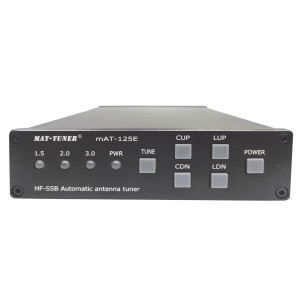 mAT-125E General Automatic Antenna TunerSpecial Price £116.96 Regular Price £129.95
 -
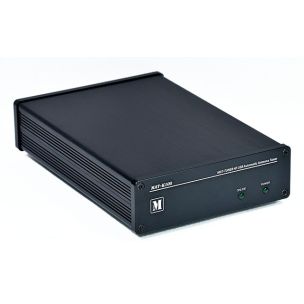 mAT-K100 Automatic Tuner For Kenwood & Icom TransceiversSpecial Price £134.96 Regular Price £149.95
 -
 mAT-180H Automatic (Tuner For use with ICOM)Special Price £134.99 Regular Price £149.99
 -
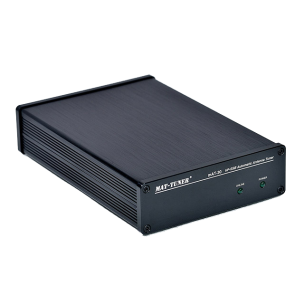 mAT-30 Automatic Tuner (For use with Yaesu)Special Price £124.95 Regular Price £139.95
 -
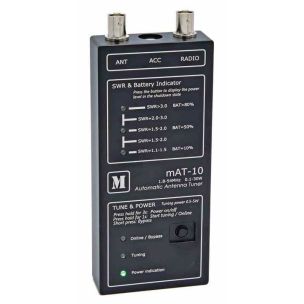 mAT-10 Automatic Tuner For QRP TransceiversSpecial Price £161.99 Regular Price £179.99
 -
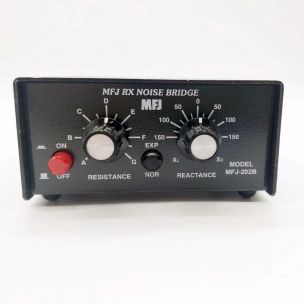 MFJ-202B - RX Noise BridgeSpecial Price £115.96 Regular Price £144.95
 -
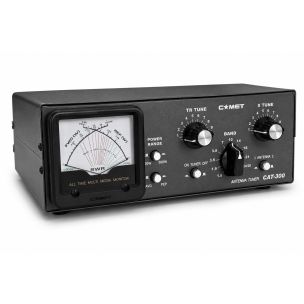 COMET CAT-300 - Antenna Tuning Unit 1.8-56MHz, 300W (PEP)Special Price £242.96 Regular Price £269.95
 -
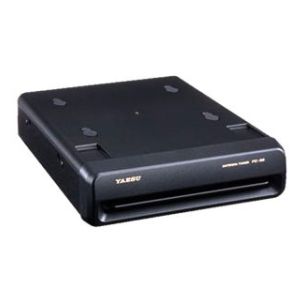 Yaesu FC-50 - Auto Antenna TunerSpecial Price £227.99 Regular Price £239.99
 -
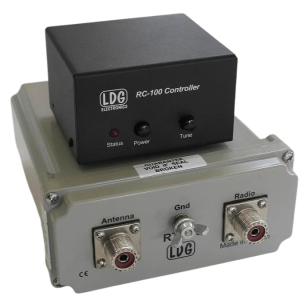 LDG RT/RC-100 - Coax In/Coax Out Remote Tuner (100 Watt)Special Price £287.96 Regular Price £319.95
 -
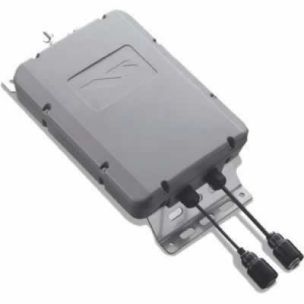 Yaesu FC-40 - External ATU For Wire AntennasSpecial Price £227.95 Regular Price £239.95
 -
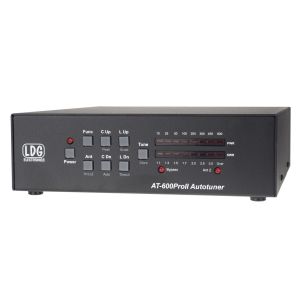 LDG AT-600 PROII - Automatic Antenna TunerSpecial Price £404.96 Regular Price £449.95
 -
 LDG Z-11 PRO II - Automatic Antenna TunerSpecial Price £224.96 Regular Price £249.95
 -
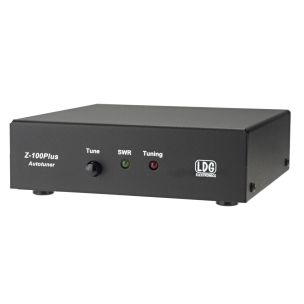
-
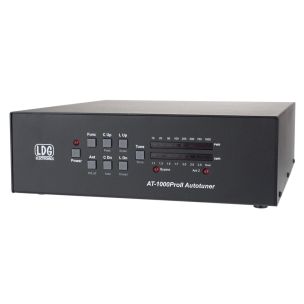 LDG AT-1000 PRO II - Automatic Antenna TunerSpecial Price £539.96 Regular Price £599.95
 -
 LDG AT-200 PRO II - Automatic Antenna TunerSpecial Price £305.96 Regular Price £339.95
 -
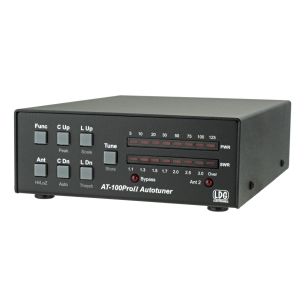 LDG AT-100 PROII - Automatic Antenna TunerSpecial Price £269.96 Regular Price £299.95
 -
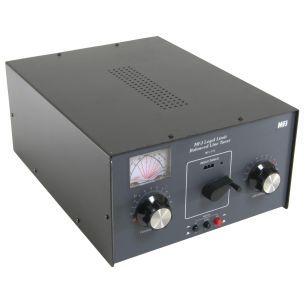 MFJ-976 - Balanced Line TunerSpecial Price £559.96 Regular Price £699.95
Choose Antenna Tuners at Moonraker
Setting the FTX-1 Field for an External ATU
Before connecting and using the mAT-1F, the FTX-1 Field needs to be told that an external antenna tuner is present. By default, the radio is set to expect either no ATU or an internal option associated with the radio.
The required menu setting is straightforward:
- Press and hold the button that opens the radio menu.
- Go to Menu Page 3.
- Select Operating Settings.
- Scroll down to Options.
- Open the top menu item, which is the ATU setting.
- Change the setting from Internal to External or EXT.
Once this is set, the FTX-1 Field will recognise and control the external mAT-1F tuner.
Connection Is Simple
Only two cables are needed between the transceiver and the mAT-1F:
- The BNC antenna lead goes from the tuner to the HF antenna socket on the rear of the FTX-1 Field.
- The multi-pin control lead goes from the tuner to the accessory socket on the rear of the radio.
For coax-fed antennas, the tuner has a BNC RF connection. An adapter can be used where necessary for an SO-239 coax arrangement.
It also has two banana sockets for direct wire operation:
- Red terminal: antenna wire.
- Black terminal: earth or counterpoise wire.
That dual capability is one of the strongest points of the mAT-1F. It can sit between the transceiver and a conventional coax-fed antenna, but it can also make a very useful portable station with nothing more than a length of wire and a counterpoise.

Testing the mAT-1F with an End-Fed Half-Wave
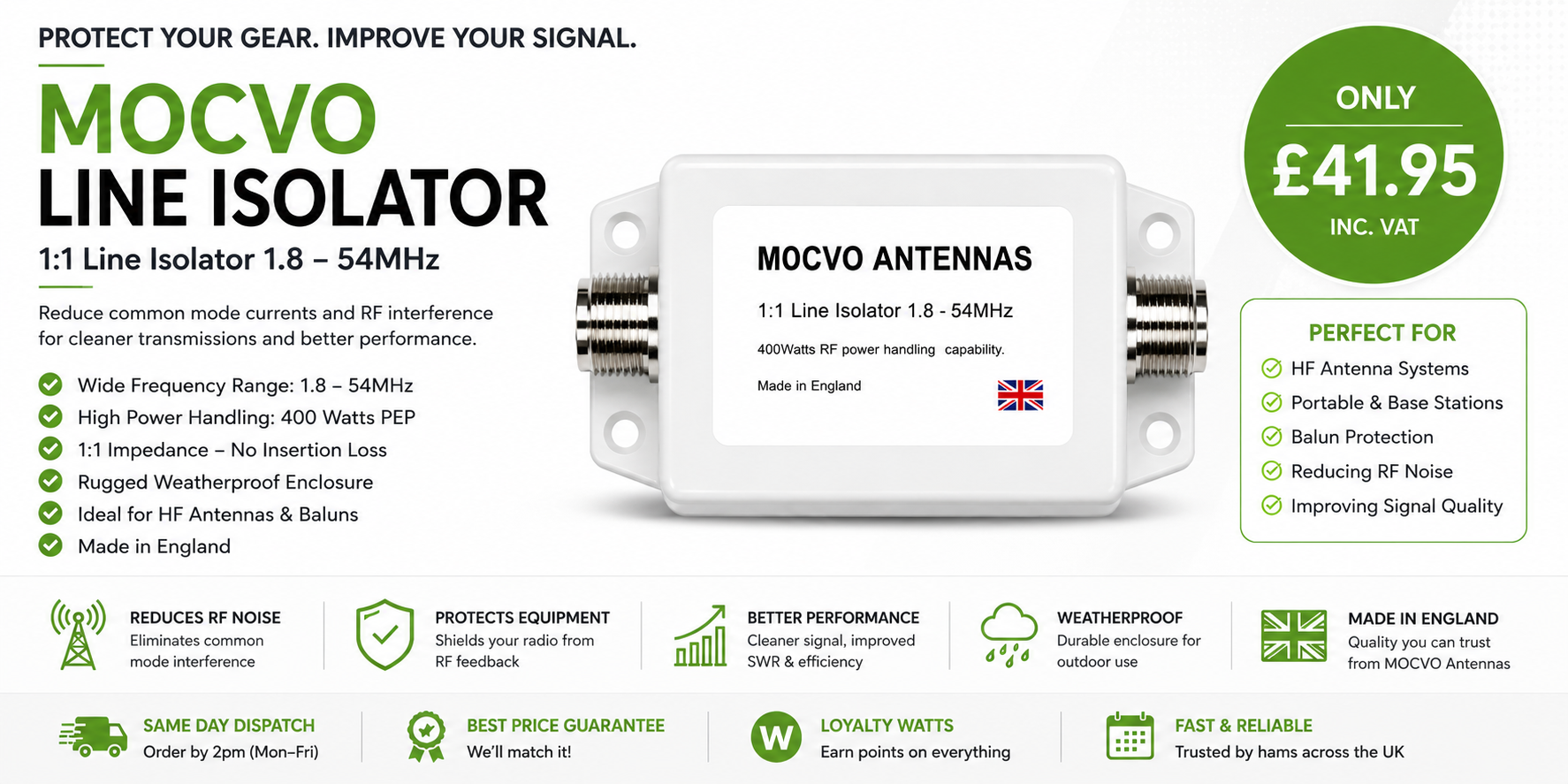
The first antenna used was an end-fed half-wave, connected through a line isolator. The isolator helps keep RF out of the tuner and transceiver and gives more reliable measurement conditions.
The antenna was resonant on the main amateur bands of 40, 20, 15 and 10 metres, where its SWR was around 2 to 2.5:1. These are not particularly difficult conditions for a tuner, but they are exactly the sort of real-world impedance variations that a portable automatic tuner needs to deal with efficiently.
On 40 metres, 20 metres, 15 metres and 10 metres, the mAT-1F tuned extremely quickly. The tuning was effectively immediate, with the unit finding a match in well under a second.
Matching Non-Resonant Bands
The more interesting test was to use the same end-fed half-wave on bands where it was not intended to be resonant. The 17 metre and 12 metre bands present a much more reactive load, so they provide a better indication of what the mAT-1F can cope with.
The tuner successfully found matches on both 17 metres and 12 metres, and it did so quickly.
There is an important point to make here. A successful match does not automatically mean that an antenna will perform brilliantly on every band. It means that the transceiver can deliver its power into the coaxial feeder rather than reducing output because of a poor mismatch.
Losses in the feeder and antenna system can still be significant, especially when using an antenna far away from resonance. Even so, an end-fed half-wave can often be made to work on additional bands with some degree of useful, if limited, performance and efficiency.
The Benefit of Tuner Memory
The mAT-1F also appeared to retain tuning settings. Returning to a band that had already been matched resulted in extremely rapid retuning, with the required setting seemingly available immediately.
That is just what is wanted in a field radio setup. Band changes should not involve long tuning cycles, repeated adjustments, or a separate box demanding attention every time the operating frequency changes.
Testing with a Compact Vertical Antenna
The next antenna was a compact vertical of roughly 17 to 18 feet in height. It covers the amateur bands from 40 metres through to 10 metres, although it is not a perfect low-SWR antenna across that range.
This is a useful sort of antenna for a small garden, where space is limited but multiband coverage is still desirable.
The mAT-1F successfully matched the vertical from 40 metres through to 10 metres. It also tuned the antenna on 6 metres without difficulty.
That is a very respectable result for such a short vertical and confirms that the tuner is not restricted to simple resonant antennas. It can provide a practical match across a wide range of bands when connected to a compact multiband antenna system.
Using the mAT-1F with a Simple Portable Wire Antenna
Perhaps the most revealing test involved a deliberately makeshift wire antenna. This is the sort of arrangement that could be put up from a holiday property, a hotel room, or any temporary location where there is little space and no permanent antenna installation.
The setup consisted of:
- A wire approximately 40 feet long.
- The wire sloping from an upstairs window down to a shrub.
- An insulator at the far end of the wire.
- An 8-foot counterpoise dangling from the window.
- The mAT-1F connected directly to the wire and counterpoise terminals.
It was not intended to be an ideal aerial. Quite the opposite, it was a deliberately rough, practical portable arrangement.
Even with that simple wire, the mAT-1F would match from 40 metres through to 6 metres. It did not match the 80 metre band with this particular 40-foot wire, which is not surprising. For 80 metres, a substantially longer wire is needed.
Band conditions during this test were poor, particularly on 40 metres, where signals were sparse. Nevertheless, signals could still be heard through the simple wire arrangement, demonstrating that the tuner and antenna system were operational and usable.
How Much Wire Is Needed?
As with any antenna matching unit, there are practical limits. An ATU can transform an impedance, but it cannot make an extremely short wire behave like a full-size efficient antenna on the lowest bands.
Based on these tests, a useful guide is:
- 40 feet of wire: suitable for matching from 40 metres through to 6 metres.
- 80 metres: likely to need roughly double that wire length.
- 160 metres: was not tested, but would require a considerably more substantial wire antenna for sensible results.
The mAT-1F is rated to cover 160 metres through to 6 metres, but the wire still needs to be long enough for the tuner to find a workable impedance and for the antenna to offer worthwhile radiation efficiency.
Why the mAT-1F Makes Sense for the FTX-1 Field
The mAT-1F may not be internal to the radio, but it feels very much like an integrated solution. It draws power from the FTX-1 Field, is controlled from the radio, and requires no separate battery or awkward operating procedure.
Its main advantages are clear:
- Designed for the Yaesu FTX-1 Field.
- Powered through the transceiver's accessory socket.
- Controlled directly from the radio.
- Very fast tuning, often in less than a second.
- Tuning memory for previously matched bands.
- Coverage from 160 metres through to 6 metres.
- Suitable for coax-fed antennas and direct-fed wire antennas.
- Useful for home, garden, holiday and portable operation.
- Rated for the FTX-1 Field's 10 W output.
Final Thoughts
The mAT-1F is a capable little automatic antenna tuner for the Yaesu FTX-1 Field. It matched a resonant end-fed half-wave with ease, handled the same antenna on non-resonant bands, worked across a compact vertical antenna system, and successfully tuned a very basic 40-foot portable wire from 40 metres through to 6 metres.
Most importantly, it does all of this quickly and with full control from the transceiver. Connect the signal and control leads, select the external ATU option in the radio menu, and press tune.
For anyone using the FTX-1 Field who wants the flexibility to operate with a coax-fed antenna, an end-fed half-wave, a compact vertical, or simply a length of wire thrown out of a window, the mAT-1F is a very sensible option.
