

VIDEO
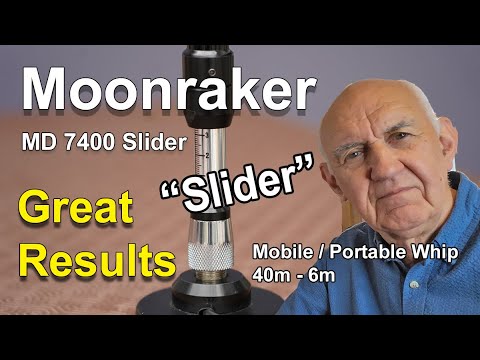
For amateur radio enthusiasts who enjoy experimenting with antennas, finding a versatile, reliable, and easy-to-use antenna is always a top priority. One such antenna that has caught my attention is the Moonraker MD 7400 Slider. This antenna offers a unique combination of multi-band coverage, smooth tuning, and portability, making it an excellent choice for both mobile and portable HF operations.
In this article, I’ll walk you through the design, functionality, and practical use of the Moonraker MD 7400 slider antenna. Drawing from my extensive experience in the hobby, I’ll share insights on its construction, tuning process, and performance to help you decide if this antenna fits your ham radio needs.

Introduction to the Moonraker MD 7400 Slider Antenna
The Moonraker MD 7400 is a mobile HF whip antenna that covers a broad range of amateur radio bands—from 160 metres up to 6 metres. It also has the capability to operate on 2 metres and 70 centimetres, although these VHF/UHF bands require some additional adjustments. What makes the MD 7400 stand out is its variable frequency capability combined with a straightforward mechanical design, which allows for quick tuning and setup.
While it is primarily marketed as a mobile antenna, I personally prefer to use it in a static mobile or portable setup rather than operating while driving. This provides a safer and more controlled environment for tuning and operation, especially when fine adjustments are needed. Whether you call it static mobile or portable, this antenna is very adaptable and user-friendly.
Design and Construction Features
The MD 7400 features a base-loaded design with a substantial coil assembly located at the bottom. Above the coil is the whip section, which is split into two parts for easier transport and storage. The two-part whip is held together with grub screws, making assembly and disassembly straightforward.
- Length: When fully assembled, the antenna measures approximately 1.7 meters in length. This length can vary slightly depending on the frequency to which the antenna is tuned.
- Telescopic Coil Section: The coil assembly is telescopic and slides up and down to adjust resonance. This smooth sliding action allows for precise tuning across the HF bands.
- Locking Mechanism: Once the desired resonance point is found, a threaded locking section secures the coil in place to maintain tuning stability.
- Connector: The base is equipped with a standard PL259 plug, compatible with most common hatch mounts and mag mounts, simplifying vehicle installation.
One of the things I appreciated about the MD 7400 was the smoothness of the tuning slider. Unlike many antennas that have notchy or clicky adjustments, the Moonraker slider glides smoothly, making fine tuning much easier. The coil housing is sealed, so it’s not possible to see the internal coil without disassembling the antenna, which I avoided to prevent damage.
How the Antenna Tunes: A Simple Yet Effective Mechanism
The tuning principle behind the MD 7400 is elegantly simple. The antenna consists of the whip and the base coil, with a sliding contact that moves along the coil to change the inductance in the circuit. Here's how it works:
- Sliding Contact Position: The lower the slider moves on the coil, the higher the operating frequency because the inductance decreases.
- Increasing Inductance: Sliding the coil up increases inductance, which lowers the resonant frequency of the antenna.
This adjustable inductance allows the antenna to cover multiple HF bands without the need for separate antennas or complex tuning units. The coil slide is marked with calibration numbers, which serve as reference points for different frequency bands. However, these numbers are not direct frequency indicators but rather arbitrary markings to help you quickly return to a previously tuned position.
Setting Up the Moonraker MD 7400 on Your Vehicle
For my tests, I mounted the antenna on the rear hatch of my vehicle using a hatch mount equipped with an SO239 socket. This is a popular and convenient mounting option for mobile antennas as it provides a solid base and easy access for tuning.

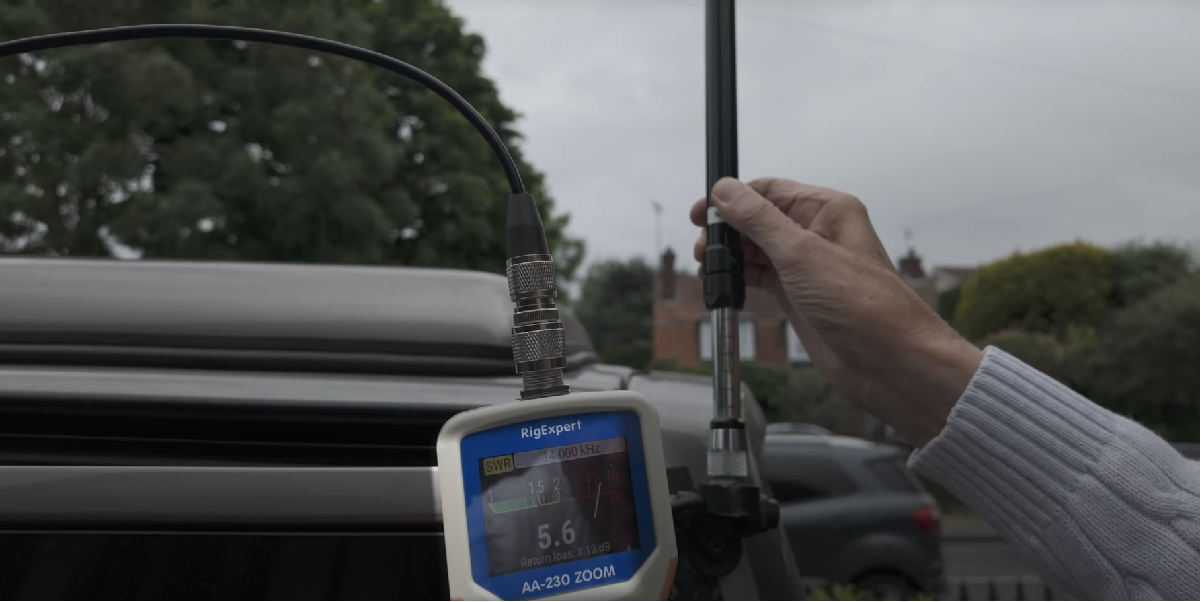
Once mounted, the antenna can be adjusted by sliding the coil section up or down. To simplify tuning, I used an antenna analyzer set to the desired operating frequency (for example, 14 MHz for the 20m band) and monitored the VSWR (Voltage Standing Wave Ratio). By moving the coil slider slowly, I was able to find the resonance point where the VSWR was lowest, indicating the best match between the antenna and the radio.
This method is quick and effective, allowing for on-the-fly adjustments without guesswork. After finding the optimal position, tightening the locking mechanism ensures the coil stays put during operation.
Performance and Practical Use
In terms of performance, the Moonraker MD 7400 exceeded my expectations for a mobile whip antenna of its size and price point. It offers solid coverage across the HF bands, making it suitable for a variety of operating modes—from voice (SSB) to digital modes like FT8 and CW.
The manufacturer rates the antenna for 130 watts SSB and 100 watts CW, which aligns well with typical HF mobile and portable transceiver power outputs. This makes it a practical choice for most amateur radio operators looking for a cost-effective, multi-band solution.
During my testing, I was able to receive reverse beacon network reports from stations over 2,100 miles away on the 20m band, demonstrating respectable propagation and signal quality. The antenna’s ease of adjustment means you can quickly adapt to different bands throughout the day, maximizing your operating opportunities.
Calibration and Tuning Tips
The calibration markings on the coil slider are a helpful guide for returning to known resonant points, but they are not precise frequency indicators. Here’s a recommended approach to calibration:
- Find the resonant point for a particular band using an antenna analyzer or SWR meter.
- Note the calibration number on the coil slider at that point.
- Repeat this process for other bands you intend to use.
- When changing bands, use the calibration numbers as a starting point and fine-tune as necessary.
This approach saves time and ensures you get close to resonance quickly, minimizing the need for extensive adjustments in the field.
Considerations for 2m and 70cm Operation
While the MD 7400 can operate on 2 metres and 70 centimetres bands, this requires swapping out the whip section for a shorter one and adjusting the coil slider accordingly. I did not test these bands extensively due to location and time constraints, but it’s worth noting that the antenna is designed primarily with HF operation in mind.
If VHF/UHF operation is a priority, you might want to consider dedicated antennas for those bands or be prepared for additional setup steps with the MD 7400.
Who Should Consider the Moonraker MD 7400 Slider Antenna?
This antenna is an excellent choice for amateur radio operators who want a versatile, easy-to-tune mobile or portable antenna without breaking the bank. It’s particularly well suited for:
- Operators who prefer static mobile or portable setups rather than operating while driving.
- Those seeking multi-band HF coverage with quick frequency changes.
- Amateurs looking for a cost-effective antenna that delivers good performance for its size.
- Operators who value smooth, precise tuning without fiddly notches or clicks.
Because of its simplicity and adaptability, the MD 7400 is also a great option for newcomers to mobile and portable HF operation who want a straightforward antenna solution.
Final Thoughts
The Moonraker MD 7400 Slider antenna impressed me with its thoughtful design, smooth tuning mechanism, and solid performance across multiple HF bands. Its portability and compatibility with standard mobile mounts make it a versatile tool for ham radio enthusiasts who enjoy operating from various locations.
While it may not be the perfect antenna for every situation—especially if you require frequent VHF/UHF operation—the MD 7400 offers excellent value, particularly for those focused on HF bands. The ability to quickly tune and lock the antenna in place simplifies the often fiddly process of mobile antenna tuning.
If you’re looking for an affordable, effective multi-band mobile or portable antenna, the Moonraker MD 7400 slider is definitely worth considering. Check out the pricing and availability at reputable ham radio stores, and you might find this antenna to be the solution you've been searching for.
Happy operating, and enjoy your ham radio adventures!
For more information please visit our online store or alternatively contact us and we'll be happy to assist you!