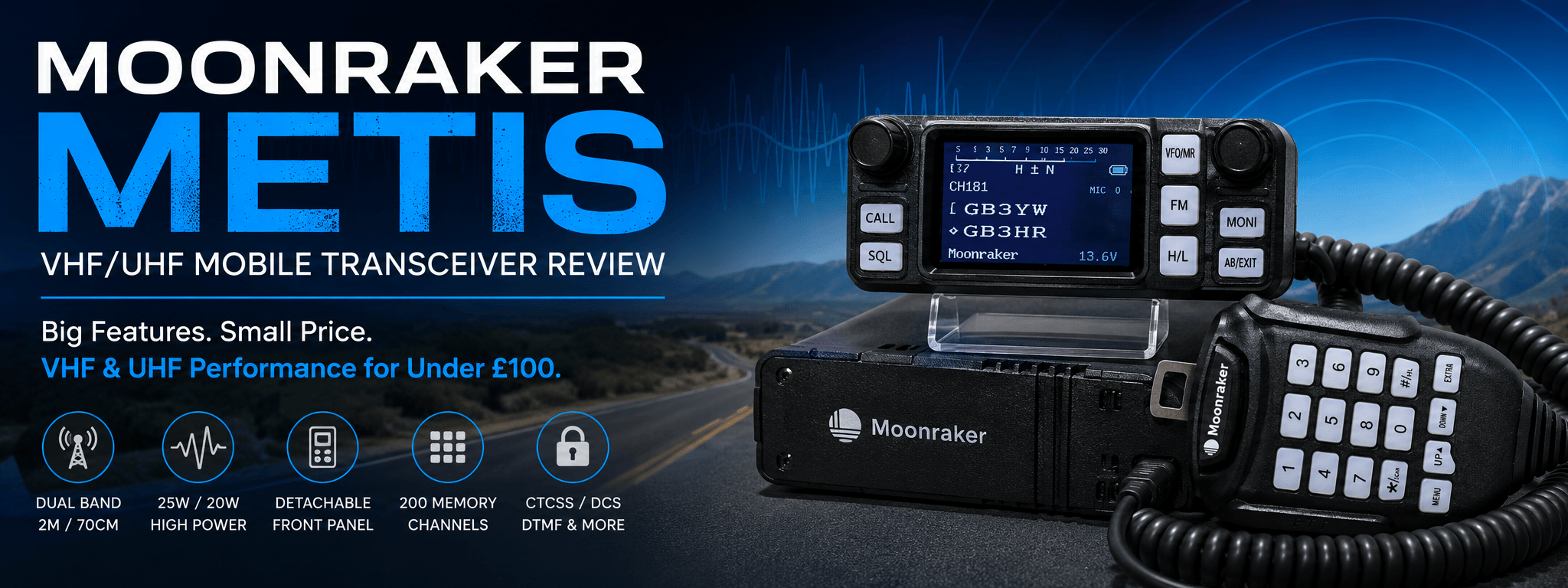
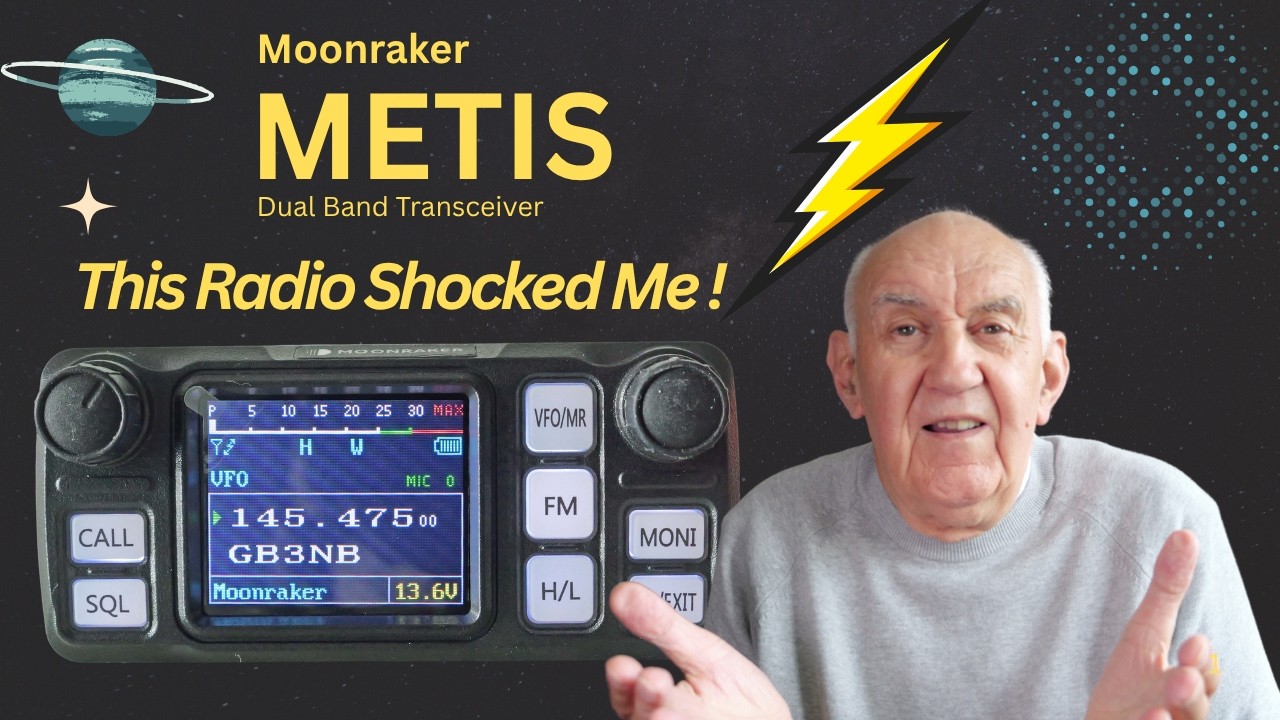
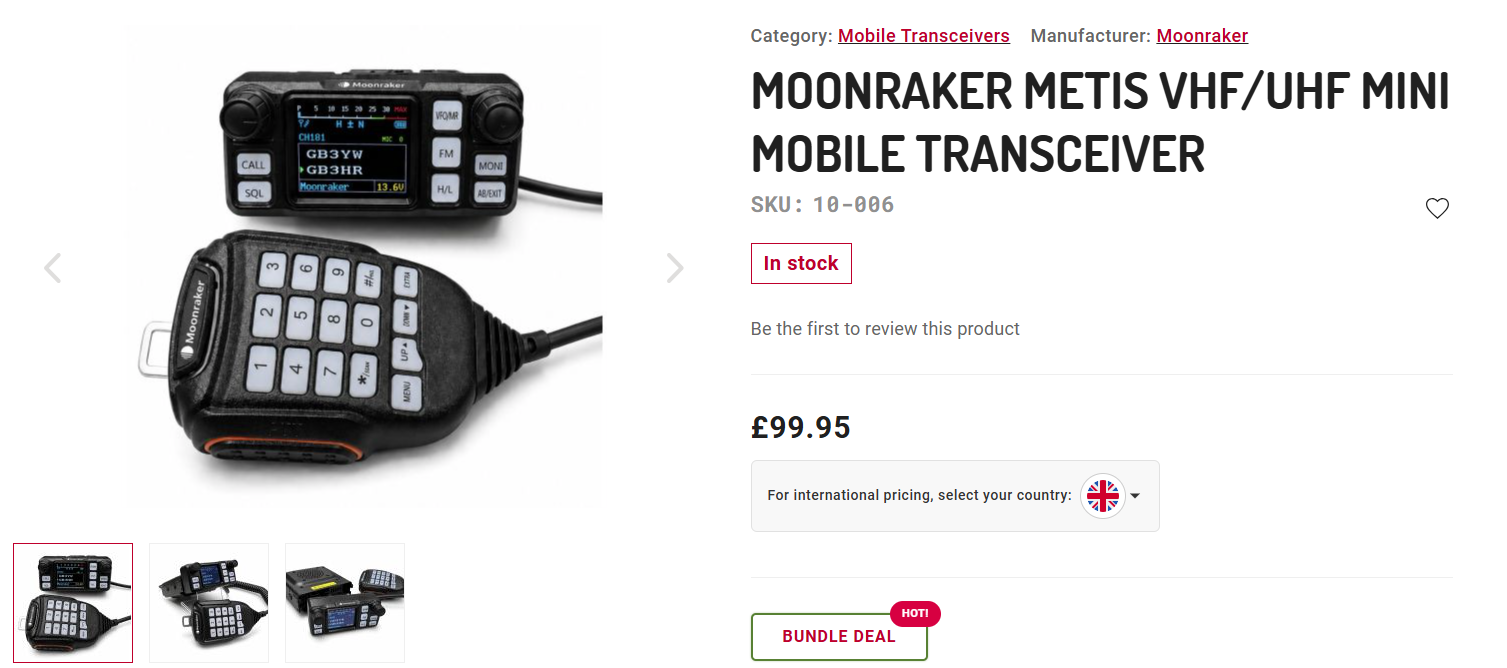
Every so often, a radio turns up that makes you stop and look twice. The Moonraker METIS is one of those sets. It is a 2 metre and 70cm dual band mobile transceiver with a removable head, a supplied remote cable, a multifunction microphone, and a feature list that really does not look like it belongs in the sub £100 bracket.
At £99.95, it lands in a very interesting spot. Even if VHF and UHF are not your main focus, that sort of price makes it easy to justify as a shack companion, a mobile rig, or simply a practical way to keep an ear on local repeaters and nets. And once you actually take it out of the box, the surprise continues.
First impressions and what comes in the box
The presentation is much better than you might expect from a budget class transceiver. This is not bare bones packaging. The box is properly printed and well put together, and it includes a printed user manual, which is always welcome.
Inside, you get:
- The main transceiver body
- A mounting bracket
- A multifunction microphone with curly lead
- A remote head extension cable
- A DC lead fitted with a cigar lighter plug
- Dashboard mounting hardware for the detachable head
- Screws and fitting accessories
- An adhesive microphone hanger
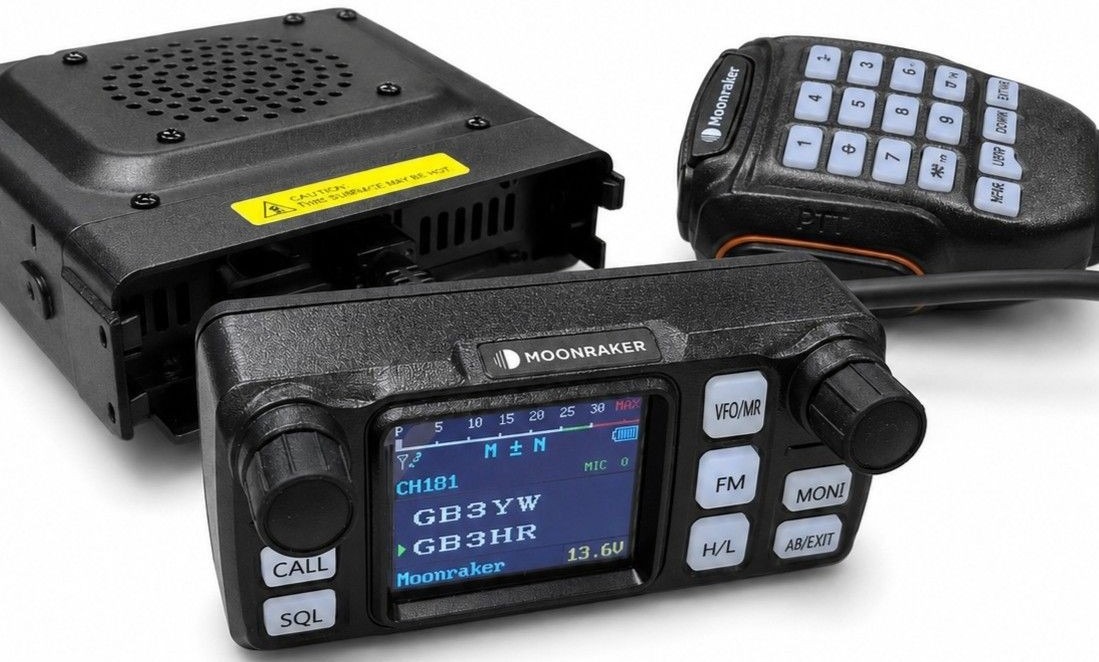
The METIS is very compact. Smaller than expected, in fact. That makes sense when you consider the power levels are 25W on 2 metres and 20W on 70cm, but even so, it is a notably tidy little radio.
Compact design with practical mobile features
The radio body is small, but it still looks and feels like a proper transceiver rather than a cut price compromise. On top, there is a speaker facing upward. On the rear, the layout is straightforward and sensible.
You get a single SO-239 antenna socket for both 2 metres and 70cm, a cooling fan, the DC input lead, and two additional sockets. One is a data connection, and the other is a line output style socket carrying PTT, microphone audio, and ground for external interfacing.
The supplied DC lead uses a cigar lighter plug, which is actually quite convenient for mobile use. Since the current draw is modest for a rig in this power class, it is a practical choice for many vehicles.
The detachable front panel is more useful than it first appears
One of the more attractive features of the Moonraker METIS is the removable front panel. There is no microphone socket on the visible front because the microphone plugs into the radio body behind the detachable head.
Once the panel is unclipped, you can connect the microphone directly to the set. The front panel can then be reattached while allowing the mic cable to exit through a side opening. There is a choice of routing points, so you can decide which side suits your installation best.
This arrangement works well because it means you can:
- Use the radio with the head attached as a compact base or mobile unit
- Remove the head for remote mounting in a vehicle
- Keep the microphone connected without awkward rearranging
The supplied extension cable handles the remote head connection, and there is also a separate mount for fixing the head unit to a dashboard or other surface. The included adhesive pad and mounting hardware make that process easier, and the microphone hanger is a nice touch for tidy mobile installation.
Using it as a mobile rig or a base station
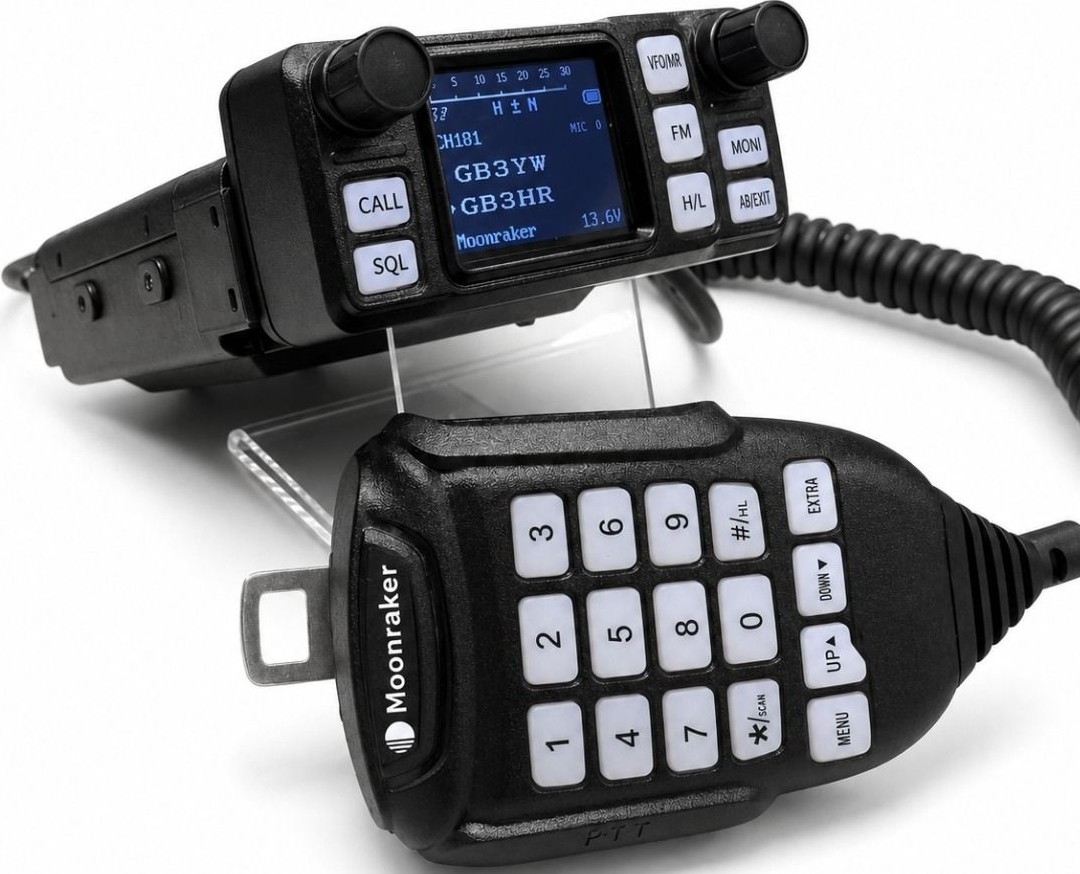
The included metal bracket serves the usual mobile mounting purpose, but it can also work nicely on the desk by angling the radio upward for easier viewing and operation.
If you remove the head unit, it can be mounted separately using the supplied bracket and screw fitting. This gives the METIS plenty of flexibility for anyone who wants one radio to cover both home and vehicle use.
That is one of the strongest points here. This is not just a cheap dual band transceiver. It is a genuinely practical one.
Display layout and preloaded memory channels
When powered on, the METIS presents a dual display arrangement. Think of it as two working slots or two VFO positions, one upper and one lower. Each can hold a channel or frequency independently, which makes it easy to jump between two active choices.
The radio includes 200 memory channels, and these are preloaded with popular UK repeaters to help you get on the air quickly. For a newcomer, that is a very handy starting point. For an experienced operator, it is still useful to have a working memory bank ready to go straight away.
Switching between the upper and lower positions is simple, and the microphone controls make that fast and intuitive.
On screen indicators and basic operation
The display includes a power meter and signal indication. During transmit, the bar graph shows output activity. During receive, that same area serves as an S meter when the squelch opens.
At the top of the screen, the operating mode indicators show key status information:
- H for high power
- M for medium power
- L for low power
- N for narrow mode
- W for wide mode when using FM broadcast reception
Channel selection is quick and straightforward, using the controls on the right side of the set. The memory bank can be scanned through rapidly, which is especially handy when checking local repeater activity.
Modes, signalling, and extra functions
For a radio at this price, the feature list is surprisingly generous. The METIS includes:
- CTCSS
- DCS
- DTMF
- Two tone signalling
- Five tone signalling
- Voice scrambling
This is where the radio starts to feel less like a bare minimum budget unit and more like a thoroughly equipped dual bander that just happens to cost very little.
It is especially well suited to:
- Beginners setting up their first proper mobile transceiver
- Operators who mostly work HF but want reliable local VHF/UHF access
- Anyone wanting a second rig for club nets, repeaters, or local simplex use
- Mobile operators who need a compact detachable head design
Memory mode and VFO mode
The METIS makes it easy to move between stored channels and direct frequency entry operation.
In memory mode, the dual display can show stored repeater channels on both upper and lower positions. With a quick button press, you can switch into VFO mode and replace those memory channels with live frequency displays for simplex use.
That means you can:
- Keep repeaters stored and ready in memory mode
- Swap to VFO mode for direct frequency tuning
- Assign different frequencies to the upper and lower displays
- Move quickly between two active operating positions
For day to day use, that makes the radio feel flexible rather than restrictive.
Built in FM broadcast receiver
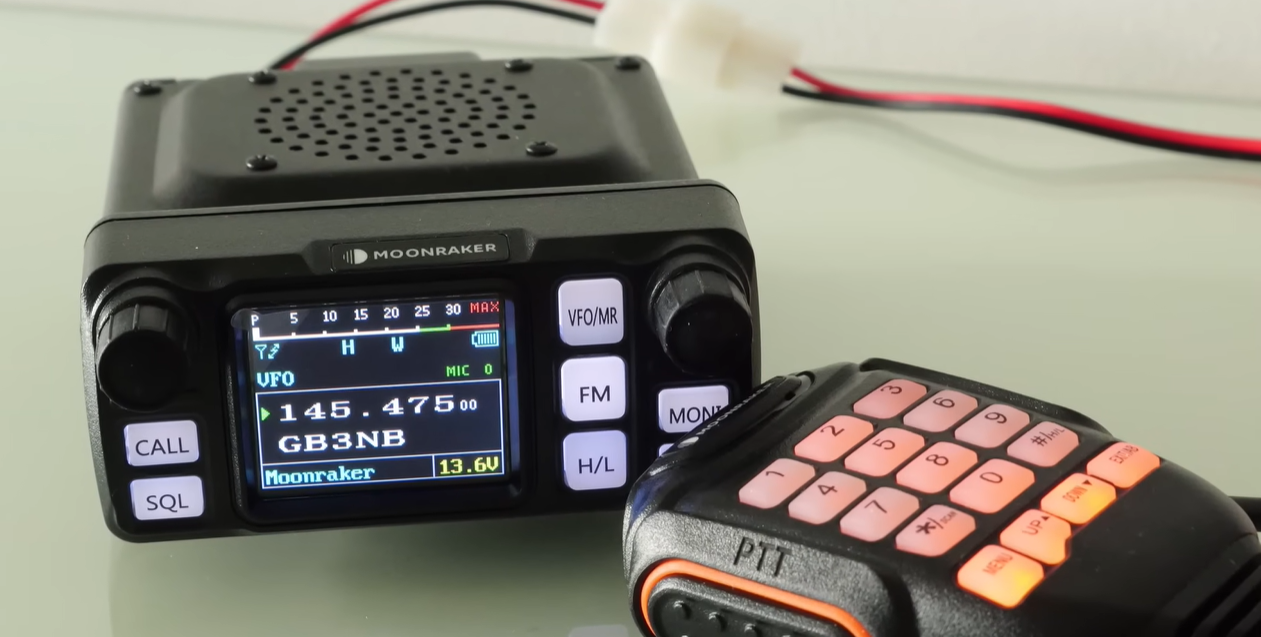
There is also an FM broadcast mode, selected from a dedicated front panel button. Press that and the radio switches over to the FM broadcast band, with the display showing the broadcast frequency.
It is a simple feature, but a useful one. In a mobile installation especially, having broadcast FM available without needing a separate receiver is a welcome extra.
Menu system and customisation
Despite the low price, the menu system is fairly comprehensive. You can do much more than just select a channel and transmit.
The radio allows you to:
- Store new frequencies into memory
- Rename memory channels
- Adjust tuning step size
- Change display colours and visual settings
- Configure various operating parameters from the menu
Accessing the menu is done through the microphone controls. Press the menu button, scroll through items, enter the chosen setting, make the adjustment, then confirm and exit. It is straightforward once you have done it a couple of times.
For anyone planning to do more serious setup, programming software is available from the retailer's product page, along with a downloadable user manual. That will make memory management and custom configuration much easier than doing everything from the microphone and panel controls.
On air testing
A radio can look good on paper and still disappoint once it is actually used. Happily, the METIS performed properly on air.
A repeater test into GB3PI from roughly 45 to 50 miles away opened the repeater without difficulty, which is a good sign. There was no return call at that moment, but the access itself worked as expected.
A simplex call on 2 metres brought back a strong report from Shrewsbury, with audio described as fine and trouble free. That practical test confirmed the radio was putting out a good clean signal and doing exactly what it ought to do.
Measured power output and fan behaviour
Claimed output on 2 metres is 25W, and measured performance came in just under that at around 24W. Medium power was about 11W, while low power sat at roughly 5W.
That is close enough to the stated figures to inspire confidence.
The cooling fan behaviour was also sensible:
- At low and medium power, the fan did not really need to come on
- At high power, it started after around a minute
- It was audible, but not intrusive
- That is a good result for a compact mobile transceiver, especially one designed to fit into tight spaces.
Front panel and microphone controls
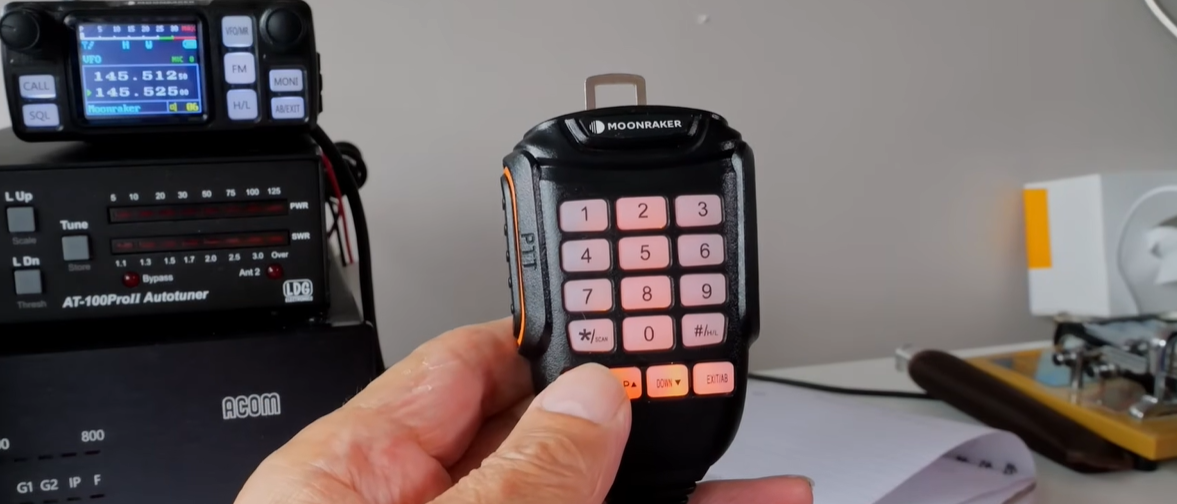
The control layout is simple and practical. Key functions include:
- Call for transmitting a preset access tone
- Squelch for adjusting squelch level from 0 to 5
- VFO/Memory for switching operating style
- FM for entering broadcast radio mode
- H/L for cycling through high, medium, and low power
- Monitor for opening the squelch and listening through
- A/B for switching between the upper and lower display positions, also serving as an exit control
Much of the routine operation can be handled from the microphone, which is particularly helpful when the radio is mounted out of reach in a mobile setup.
Receive performance and overall feel
Build quality is one of the most pleasant surprises here. Although it is almost certainly built in China, there is nothing flimsy or badly finished about it. It feels solid, well thought out, and more refined than the price suggests.
Receive sensitivity is very good as well, standing up well against more established rigs used in a base station role. In everyday terms, it hears what it should hear, and it does so without giving the impression of being a compromise set.
Who is the Moonraker METIS for?
The Moonraker METIS makes sense for a wide range of amateur radio operators.
- New licensees who want an affordable first mobile rig with real features
- Casual VHF/UHF operators who want local coverage without spending heavily
- Mobile users who need a detachable head and compact body
- Shack owners looking for a second radio for monitoring repeaters or joining local nets
- Value focused buyers who want maximum function for minimum outlay
Final thoughts
The Moonraker METIS dual band ham radio transceiver does exactly what a good value transceiver ought to do. It covers 2 metres and 70cm, offers practical power levels, includes a detachable head with the required cable, comes with useful accessories, and performs properly on air.
What really sets it apart is how little feels missing. You get memory channels preloaded with UK repeaters, VFO operation, signalling options, FM broadcast reception, menu customisation, decent output power, good receive sensitivity, and a compact design suitable for home or mobile use.
At £99.95, it is genuinely hard not to be impressed.
If you are in the market for a dual band mobile transceiver and want something affordable without feeling short changed, the Moonraker METIS deserves a very serious look. In this price range, it stands out as one of the most compelling options around.