

VIDEO
Watch Here
The RST reporting system—standing for Readability, Strength, and Tone—has been a cornerstone of ham radio communication since the 1930s. But how well does it hold up today? Has the introduction of modern technology like the S-meter changed the way we give and interpret signal reports? And are we sometimes fooling ourselves or others when it comes to those familiar three-digit numbers? Let’s explore the origins, evolution, and current quirks of the RST system to better understand how we can keep our reports honest and meaningful.
The Origins of the RST System
The RST system was developed to give a clear, standardised way for amateur radio operators to describe what they were hearing. It breaks down into three components:
- R - Readability: How well can you understand the station? This is rated from 1 (unreadable) to 5 (perfectly readable).

- S - Strength: How strong is the signal? This ranges from 1 (faint signals) to 9 (extremely strong signals).

- T - Tone: Originally designed for Morse code (CW) signals, this rates the quality of the tone from rough or chirpy to a pure, smooth tone.

For example, a report of “5-9-9” means perfectly readable, very strong, and a clear tone. The tone aspect was especially important back when CW was a primary mode of communication, and issues like chirp or key clicks could affect reception.
How the Introduction of the S-Meter Changed Things
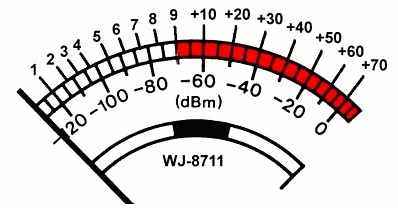
The arrival of the S-meter—an instrument that measures signal strength electronically—brought new challenges. Traditionally, signal strength reporting was subjective, based on what the operator heard. But the S-meter introduced a seemingly objective way to quantify signal strength, which many operators began relying on.
Here’s where the confusion starts:
- The industry generally agreed that a 50 microvolt signal at the 50-ohm antenna terminal equated to an S9 reading on the meter.
- Each “S point” on the meter was thought to represent a 6 dB increase in signal strength. So, S8 is 6 dB weaker than S9, S7 is 12 dB weaker, and so forth.
- However, variations exist. Some interpretations suggest 4 or 5 dB per S-point, and calibration differences between radio models mean S-meter readings are not always consistent or reliable.
The Impact of RF Gain Controls and Attenuators
Modern radios often include RF gain controls and attenuators, which can further complicate S-meter readings.
- RF Gain Control:
- In other radios, reducing the RF gain lowers the actual S-meter reading, even though the incoming signal strength hasn’t changed. This can make a strong signal appear weaker simply because the operator adjusted the gain to reduce noise.
- Attenuators:
Some radios cause the S-meter to “rise” as the gain is reduced, resting at a higher baseline (e.g., S3 instead of zero). This means weak signals may not move the meter at all, potentially giving a misleading impression of signal strength.
When switched in, these reduce the incoming signal by a fixed amount (e.g., 6 dB or 12 dB), which again lowers the S-meter reading. So the same signal might read S9 without attenuation and S7 with attenuation, confusing the meaning of the meter.
All these factors mean the S-meter can be unreliable as an absolute measure of signal strength. It depends heavily on the radio’s design and the operator’s settings.
How Should We Give Signal Reports Today?
Given all these complexities, the question arises: should we rely on the S-meter reading or our own ears when giving a report?
My take is that we should return to the roots of the RST system—base reports on what we actually hear rather than what the meter reads. After all, the purpose of the RST report is to tell the other operator how well their signal comes through to us, not simply to relay a number from an instrument.
Of course, this is easier said than done. Many operators, especially newcomers, rely heavily on the S-meter for quick assessments. Yet, experienced “old-timers” often trust their ears over the meter, recognising the many variables that influence readings.
The Contest Reporting Conundrum
Contests add another layer of complexity to signal reporting. It’s quite common to hear the standard “599” report given regardless of the actual signal quality. This is because contest stations often use pre-programmed exchanges where the only changing element is the serial number.
This practice can be frustrating for those who want honest feedback. The 599 report has become almost a default “all clear” signal in contests, irrespective of whether the signal is weak or strong. And for CW operators, the tone report is almost always “9,” reflecting the generally high quality of modern CW transmissions.
So, in contests, the RST system loses much of its original meaning, turning into a standard code rather than a genuine assessment.
Where Do We Go From Here?
In summary, the RST system remains a useful tool for ham radio operators, but it’s important to understand its limitations in the modern context:
- The original intent was to provide a subjective report based on listening experience, not an exact measurement.
- S-meters and radio controls can distort the perceived signal strength, so meter readings should be taken with caution.
- In contests, the RST report often becomes a formality rather than a true report.
- Returning to honest, ear-based reporting can improve the quality and usefulness of signal reports.
Ultimately, “S9 is S9” regardless of meter readings or attenuation settings. If you want your reports to be meaningful, trust your listening skills and provide feedback that reflects what you really hear. That’s what keeps the spirit of ham radio communication alive and honest.
About the Author
This reflection on the RST system comes from Peter G3OJV, founder of Waters & Stanton and a licensed ham radio operator for over six decades. With an extensive background in the hobby, Peter offers valuable insights into the evolving practices of amateur radio, encouraging operators to embrace both tradition and practical wisdom.
For those looking to upgrade their equipment or explore new gear, Waters & Stanton offers a wide range of radios and accessories, along with expert advice and part-exchange deals. You can learn more at hamradiostore.co.uk.
Enjoy your ham radio experience, and remember: honest communication is the heart of our hobby.
For more information please visit our online store or alternatively contact us and we'll be happy to assist you.
Main Picture Source