


For many amateur radio operators, finding the right antenna solution can be a real challenge—especially when space is limited, neighbours have objections, or local restrictions prevent large installations. In this article, inspired by insights from Peter G3OJV, we explore practical antenna ideas that fit small gardens and back yards, focusing on solutions that work well despite constraints. Whether you’re just starting out or looking to optimise your setup on a budget, this guide will help you “hope for the best” with antennas that get the job done.
The Reality of Antennas in Small Spaces
Every antenna, even a simple piece of wire, radiates some signal. The key is how effectively it radiates. Traditional wisdom emphasises resonant antennas—dipoles or quarter-wave verticals tuned to precise frequencies—because they offer predictable impedance and easier matching with 50 ohm coaxial cable. For example, a dipole’s impedance typically falls around 60 to 70 ohms, which pairs reasonably well with standard coax, while verticals often have lower impedance, around 25 to 30 ohms.
Interestingly, poor earth conditions can sometimes improve the impedance match due to added earth losses, although this reduces radiation efficiency. This highlights the “make do” approach many hams must take when ideal conditions aren’t possible.

At the heart of amateur radio is communication and experimentation. You don’t need a 60-foot mast or a complex beam antenna to enjoy talking to others a few miles away or even hundreds of miles distant. Lowering your expectations and focusing on what’s practical for your environment can lead to enjoyable and successful contacts.
Practical Antenna Options for Small Gardens
- Low Dipoles:
- Using Height to Your Advantage: Apartment Rooftops and Raised Locations-
- Endfed Antennas for Multi-Band Coverage:
- The Ribbeov Antenna: A Controversial but Promising Vertical-
If you have a small garden and can’t raise your antenna very high, consider a low dipole—perhaps just 2 to 2.5 metres above the ground. While such a dipole radiates more vertically (which theoretically isn’t ideal for long-distance contacts), reflections in a typical domestic environment can improve performance. Low dipoles are simple, inexpensive, and easy to install, making them a great starting point.

While dipoles are generally single-band antennas, the 40m dipole can also work on its third harmonic, offering some multi-band potential. For cheap wire, try speaker wire—you get two conductors for the price of one, perfect for experimentation.

Even if you live in an apartment with limited space on the roof, the height advantage can compensate. For example, a dipole placed just 1.5 metres above a flat rooftop 20 metres above ground level can benefit from the building’s height, improving signal radiation despite the antenna’s low height above the roof.
When space is tight and you want multi-band operation, endfed antennas have become very popular. A typical setup uses a 20-metre length of wire—half-wave on 40m—and a 49:1 unun transformer to feed the antenna. This configuration works not only on 40m but also on harmonics such as 20m, 15m, and 10m.
Because the antenna is fed at one end, it can be installed at a low height (2 to 3 metres) and even bent around the garden’s shape without much loss in performance. Many operators also find they can work the 17m band, roughly halfway between 20m and 15m, by utilising their transceiver’s internal antenna tuner.
The Ribbeov antenna (named after a Russian term for “fisherman’s rod”) has been gaining attention as a compact vertical solution suitable for small gardens or portable operation. It’s typically a 7.5-metre vertical wire fed at the base through a 4:1 balun, with several radials laid on the ground to form a counterpoise.
This antenna is not resonant on any specific amateur band, which means its feedpoint impedance varies across frequencies. The 4:1 balun helps bring this impedance closer to the 50 ohm coax standard, enabling multi-band operation from 40m through 10m.

While VSWR (Voltage Standing Wave Ratio) figures might be high on some bands—sometimes up to 6:1—modern transceivers with built-in antenna tuners can handle this mismatch effectively. The shorter coax lengths typical in small gardens reduce losses, making the Ribbeov antenna a viable choice for those with limited space who want multi-band capability.
Understanding VSWR and Its Impact
Many hams worry about VSWR, aiming for a perfect 1:1 match to ensure maximum power transfer to the antenna. However, modern transceivers are quite forgiving and often include antenna tuning units (ATUs) that can handle mismatches of 2:1, 3:1, or even 4:1 without significant issues.
It’s important to measure VSWR at the antenna feedpoint rather than at the transceiver end of a long coax cable. Coaxial cable losses can mask the true VSWR, making it appear better at the radio than it really is. While this might slightly broaden the apparent bandwidth, it also means you might underestimate losses.
Ultimately, some power loss due to VSWR is acceptable, especially when balanced against practical constraints like antenna height and garden size. Use online calculators (such as the VSWR Loss Calculator) to estimate your losses and make informed decisions.
Portable and Adjustable Antenna Options
For portable or temporary setups, telescopic vertical antennas offer flexibility. You can adjust their length to tune to different frequencies, making them useful for field days or short-term installations. However, these whips are often not designed for permanent outdoor use as they may corrode.
Mobile whips, originally designed for vehicles, are more weatherproof and can be mounted in gardens with a few radials. These provide a rugged and effective vertical antenna solution with good performance.
Final Thoughts: Experiment and Enjoy
Ham radio is all about experimentation and communication, not necessarily about having the biggest or most expensive antenna. With a small garden or backyard, the key is to try antennas that fit your environment and budget. Low dipoles, endfed wires with 49:1 ununs, Ribbeov verticals, and portable whips all offer practical options.
Remember to give new antennas at least a month of use before judging their effectiveness, as band conditions fluctuate. Sometimes bands are great, making your antenna seem excellent; other times they’re poor, unfairly reflecting on your setup.
If you have your own antenna ideas or setups that work well in small spaces, share them with the community. Exchanging experiences helps everyone get the most out of their ham radio adventures.
Where to Find Equipment and Accessories
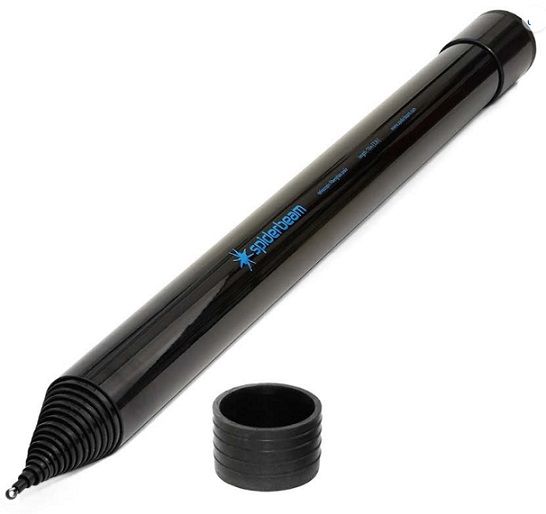
For those interested in kits and accessories, many online stores offer antenna kits, telescopic poles, and antenna analysers. For example, a 7-metre spider pole makes a great support for vertical or wire antennas. Antenna analysers, such as those from Rig Expert, help you tune and optimise your antenna system.
Whether you’re upgrading your rig or just starting out, keep an eye out for deals on popular radios like the Yaesu FT-710 or the Icom IC-7300, often bundled with power supplies or other accessories to get you on the air quickly.
Ham radio is a rewarding hobby that thrives on creativity and adaptability. With the right mindset and some practical antenna choices, even the smallest garden can become a gateway to the world.
For more information please visit our online store or alternatively contact us and our team will be happy to assist you!