

VIDEO
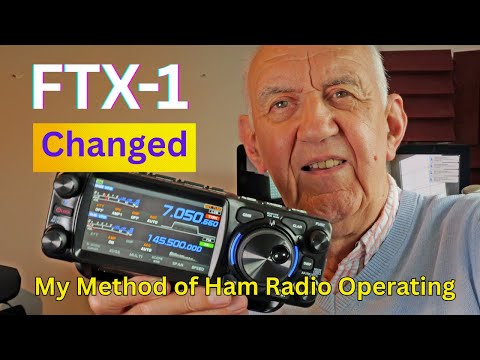
I'm Peter Waters (call sign G3 OJV) and in my recent video for the Waters and Stanton channel I took a first look at the Yaesu FTX-1 Optima and what it means for portable battery operation. After a few days of testing—mostly out in the Suffolk countryside from the camper van and on the bike—I wanted to write up my thoughts on how this radio could change the way I operate, especially when it comes to power management and portability.
Outline
- My usual portable operating habits
- Battery and external power options I've used
- First impressions of the Yaesu FTX-1 Optima
- How the Optima changes my method of operating
- Practical tips and takeaways
My usual portable operating habits
I do a lot of portable work around Suffolk—sometimes on the bike, sometimes from the camper van. I generally favour 20 metres because that band is reliably useful and my Ampro mono‑band whip mounted on the rear hatch of the van is pretty efficient there.
Over the last few years I've used several compact transceivers: the Elecraft KX3, KX2, the Xiegu X6100, and the IC‑705. These radios typically give around 5 watts from their internal batteries. They work well, but if I want a little more output or longer operating time I need an external 12 V supply or spare batteries.
Batteries and external power options I've used
I've tried a few approaches to keep the radio on the air:
- Jackery-style portable power supply – A reliable mid‑sized power station that I’ve used to recharge batteries and provide a 13.8 V supply for 10 W operation. It also has 230 V AC and USB sockets to run small items during a power cut or for charging phones and devices.
- "Big Birther" 1,200 W power supply – A proper heavy duty unit that charges from flat to full on AC in about 57 minutes and will happily boil a kettle or run a coffee maker. It’s brilliant when weight isn’t an issue, but it’s heavy and not a rucksack option.
- Spare batteries and internal batteries – With small transceivers you either carry spare packs or a way to recharge on site. That always creates extra kit to lug around and extra anxiety about battery life.
First impressions of the Yaesu FTX‑1 Optima
The Optima arrived recently and I spent a couple of hours on 20 m with it. A few things stood out immediately:
- Control head as a low‑power transceiver – The detachable control head operates independently and will run about 6 W from its built‑in battery. That’s a genuine QRP portable option in a very small form factor.
- Large battery on the control head – The control head sports a surprisingly big battery (roughly in the region of 6–12 Ah by my estimate), and in practice it seems to last a very long time. After a full charge I had no battery anxiety for a day’s portable operation.
- Charging flexibility – The control head charges via USB‑C, which is becoming ubiquitous. If you forget a proprietary lead, you’re very likely to find a USB‑C cable around. The control head also charges when connected to the Optima main unit and can be powered from the 12 V DC socket on the back of the main unit.
- Main unit capabilities – The Optima main unit gives up to 100 W on HF bands and 50 W on VHF/UHF, covers 160 m through 70 cm, includes an internal antenna matching unit and can be tucked away with only the control head on show.

Why I think the Optima will change the way I operate
There are a few practical points that make the Optima particularly attractive to me:
- Less gear to carry – For portable use I can simply take the control head and know I have 6 W and a very long lasting internal battery. That removes the need to carry spare batteries or chargers for a typical day‑out session.
- Compact base station – At home the main unit can be hidden away with its power supply and amplifier tucked out of sight. All I need on the desk is the small control head and I still have full 100 W HF capability and 50 W on VHF.
- Flexible setup – If required I can run the Optima into my linear amplifier for up to 700 W output, or use the internal 100 W capability for normal base operation. The extension cable lets you keep the main unit and PSU out of sight while the head remains accessible.
- USB‑C charging convenience – Being able to charge the head via USB‑C means less worry about proprietary chargers and more interoperability with common power banks and car chargers.
Practical tips and things to bear in mind
Conclusion and what’s next
After only a few days with the Yaesu FTX‑1 Optima I’m already convinced it will change how I approach both portable and base operation. The combination of a very usable control head with a large internal battery, USB‑C charging and a powerful hidden main unit that provides 100 W (HF) and 50 W (VHF) makes for a flexible, tidy and modern ham setup.
I’ll be doing a more detailed follow‑up with deeper dives into the controls, the niceties of operation and longer battery tests—probably across more than one instalment. In the meantime, if you’re thinking about simplifying your portable kit or wanting a compact base station that can disappear from view, the FTX‑1 Optima is worth a close look.
""You enjoy your home radio. You take care.""
For more information please visit our online store or alternatively contact us and our team will be happy to assist you!