
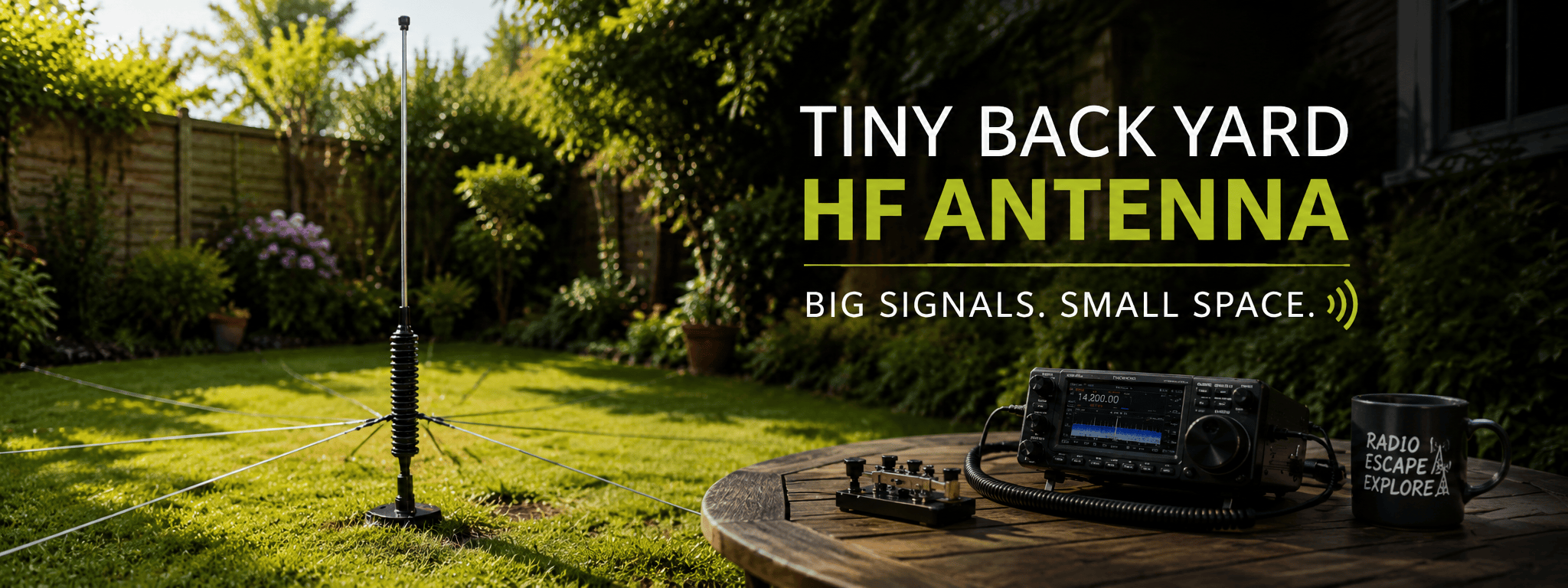
Some gardens are not merely small. They are tiny.
A few feet of space, a bit of patio, a narrow strip behind the house, and that is your lot. Yet the desire to get on HF does not magically disappear just because there is no room for a full wire antenna or a traditional vertical with a proper spread of supports.
That was the problem I wanted to solve.
The aim was simple enough: build or adapt an antenna that is small, inexpensive, reasonably efficient, quick to put up, quick to remove, and discreet enough that the neighbours would scarcely notice it. Ideally, it would also be useful for portable operation, because anything that goes up in minutes and comes down in minutes has obvious advantages beyond the back garden.
After a bit of experimenting, the result was surprisingly encouraging. The design is not perfect, and it is certainly not a miracle antenna, but for 20 metres it works well enough to deserve serious attention if space is tight.
The basic idea
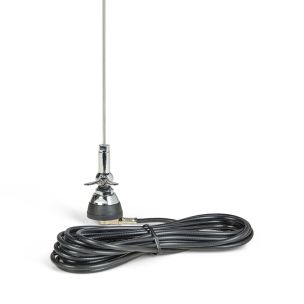
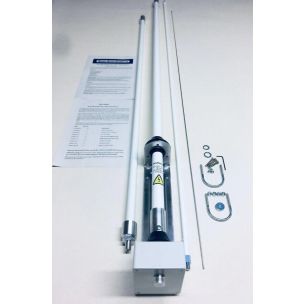
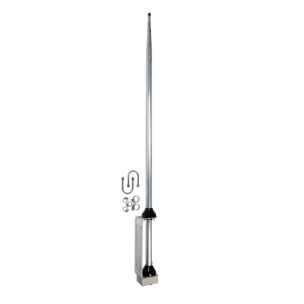
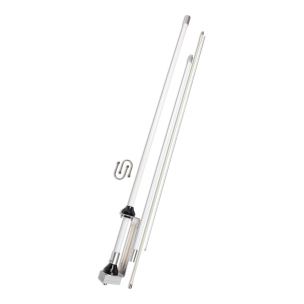
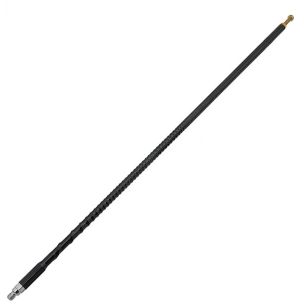
The heart of this compact HF antenna is a mobile whip, in this case an Ampro whip for 20 metres.
These antennas are normally intended for use on a vehicle, where the car body provides a large metal surface that acts as the return path or counterpoise (Flexweave antenna wire, lightning rod, Ground stake). That is a very different environment from a small garden or a portable setup in a field. On a car, the whip has plenty of metal beneath it. In a garden, it does not.
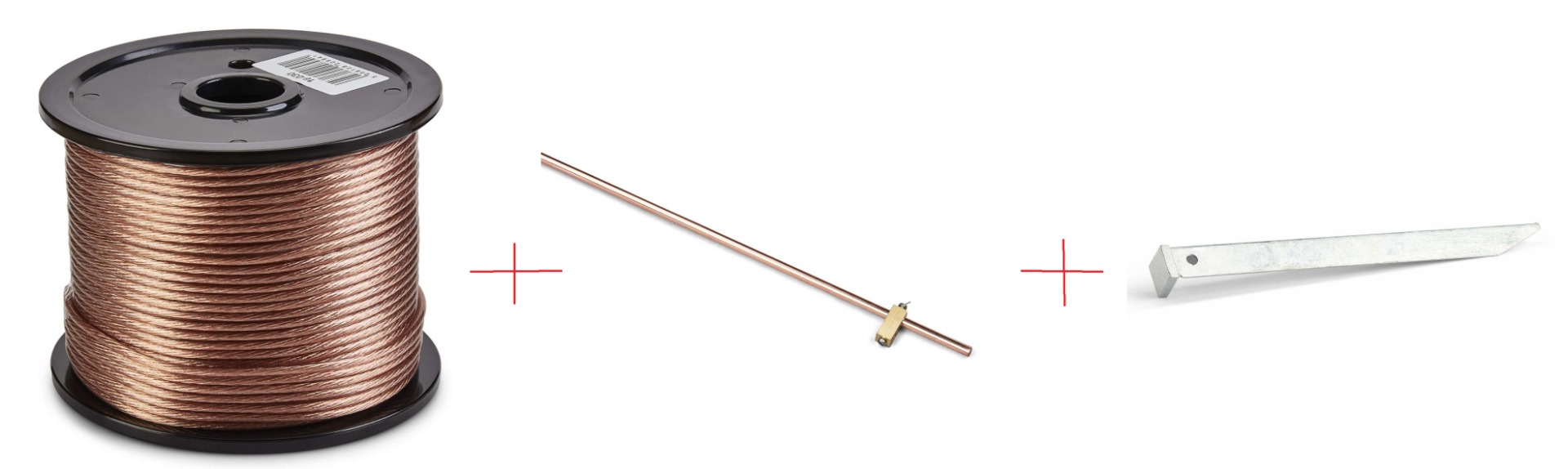
So the real question was not whether the whip itself would radiate. Of course it would. The question was whether it could be made to work efficiently enough without a vehicle, using a simple ground spike and a few radials.
If that worked, it would create a very practical solution for people with almost no available space.
Why a short loaded vertical makes sense here
The antenna used here is a two-part mobile whip:
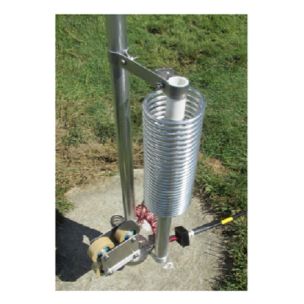
- A lower helically wound loading section
- An upper whip section that sets the resonance
Once adjusted for the band, it becomes a preset monoband antenna. That means no fiddling about every time you go out to operate. You tune it once, note the setting, and thereafter it is ready to go.
For a tiny garden, that matters. The easier it is to deploy, the more likely it is to be used.
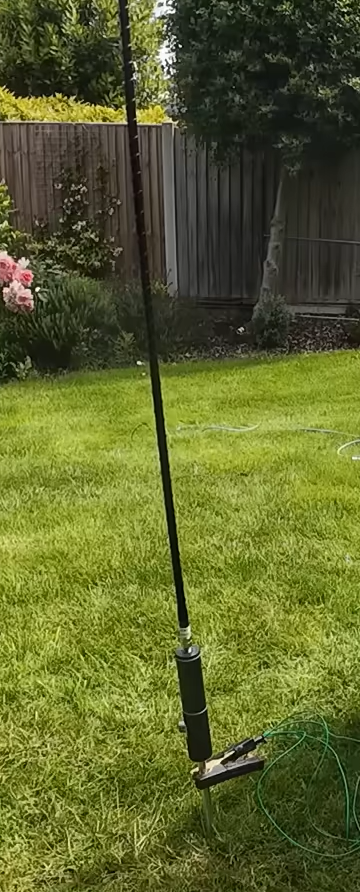
The assembled height came out at about 2.5 metres. That is quite compact, especially for HF. It is also fairly unobtrusive. It does not dominate the garden, and unless somebody is specifically looking for an antenna, they are unlikely to give it a second glance.
Performance-wise, my expectation was that it would be only around 2 to 2.5 dB down on a full-size quarter-wave vertical. Perhaps 3 dB at a stretch, but somewhere in that region. For something this small and this convenient, that is a perfectly acceptable trade-off.
The equipment used for the test
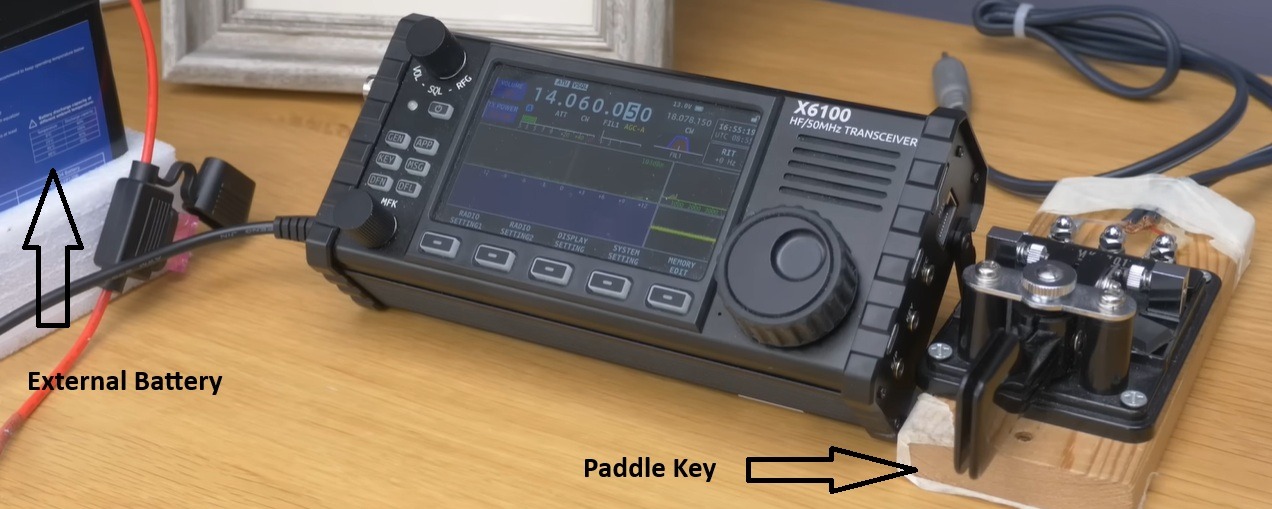
To keep the whole exercise straightforward and realistic, the antenna was tested with a compact portable HF station:
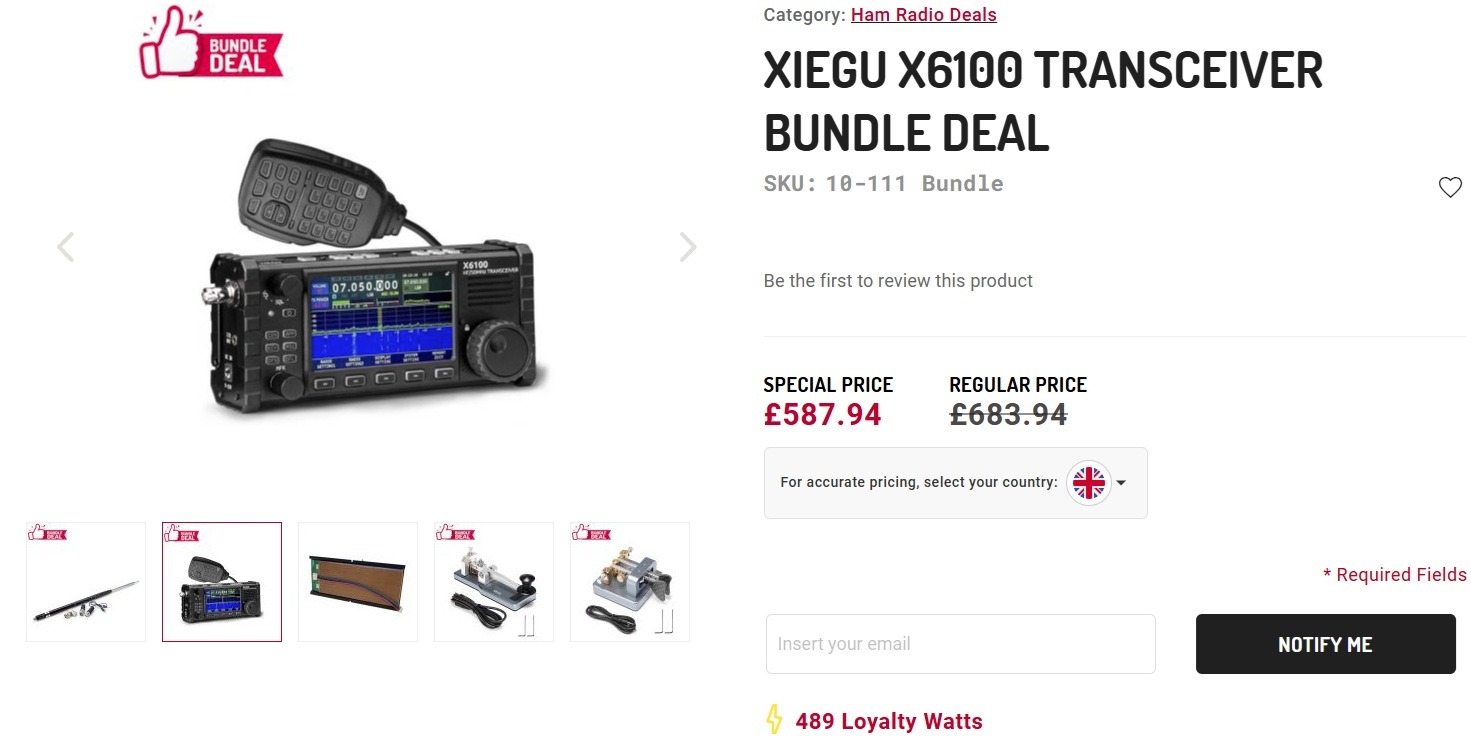
- Xiegu X6100 transceiver
- 10 watts output using an external battery
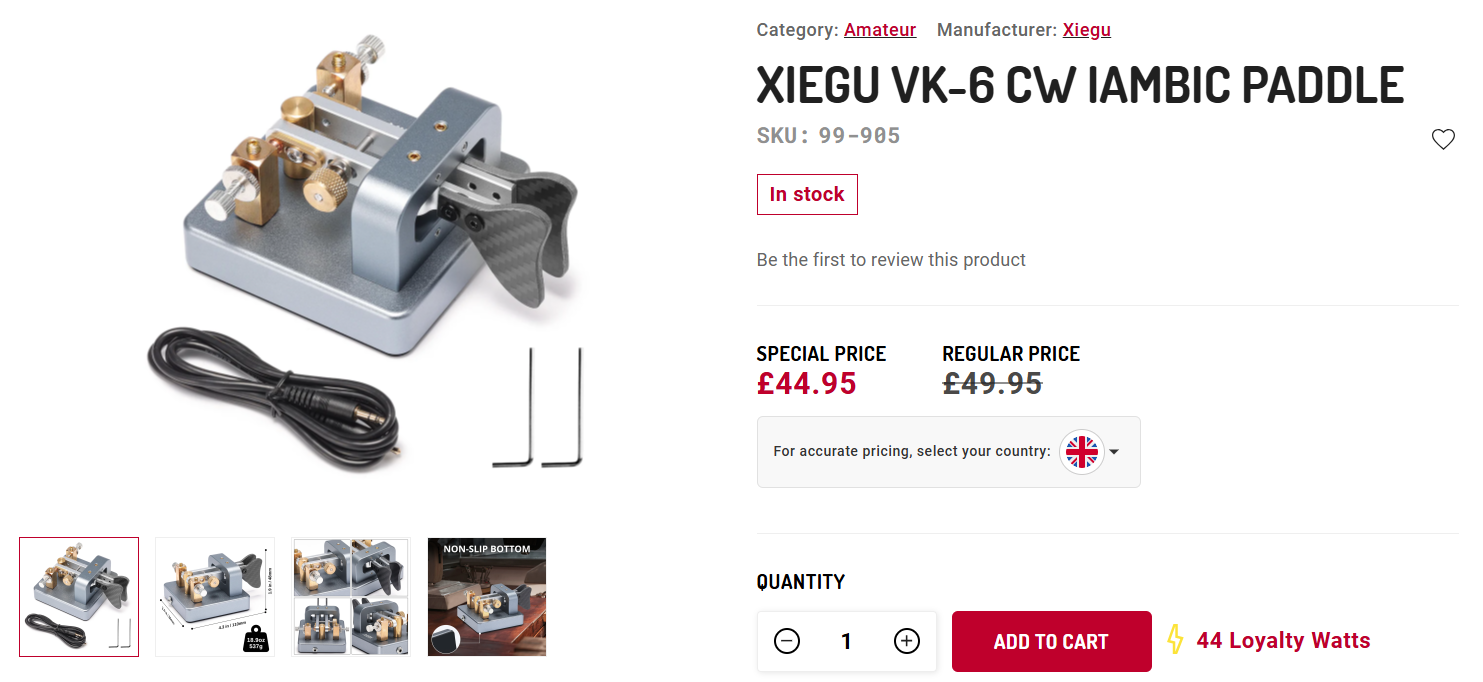
- A simple paddle key for CW testing
- A RigExpert antenna analyser for checking resonance and VSWR
- This is exactly the sort of setup many operators already own, which makes the arrangement all the more practical.
Mounting the whip in the garden
The first challenge was mechanical rather than electrical. A mobile whip needs to be mounted on something stable.
The simple answer is an earth spike base with an SO-239 connection and threaded fittings. These are widely available and useful for all sorts of temporary vertical installations. Screw the spike into the base, push it into the ground, and you have a neat support for the antenna.
There was one minor snag. The thread on the whip was 3/8 inch, while the socket on the mount was M10 metric. Those two are close, but not the same. They are not truly compatible, although in this case the whip would screw in a couple of turns and hold firmly enough for testing.
Strictly speaking, the proper answer is to use the correct adapter, and that is what I would recommend. For a quick experimental lash-up, though, the partial fit was good enough because the antenna is light and not especially tall.
That is often the nature of antenna experimentation. Sometimes you have to cobble things together just to answer the important question: does the idea actually work?
The earth spike is not enough on its own
This point is important.
Although the antenna is supported by a spike driven into the ground, that spike is not an adequate RF earth by itself. Soil has significant resistance, and a single metal rod does not magically turn into an efficient return path for HF operation.
What the antenna really needs is a set of radials.
Without them, performance suffers and tuning can become unpredictable. With them, even a very compact vertical can become much more usable.
A simple radial system for portable and garden use
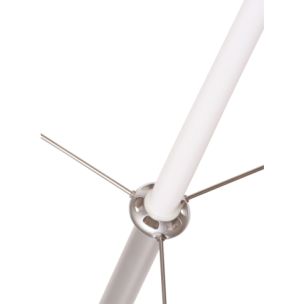
For this arrangement, four radials were attached using a large alligator clip. It is a wonderfully simple approach and especially handy for portable use.
The radials were approximately 2.5 to 3 metres long each. That may prompt the obvious question: should they be cut to an exact quarter-wave length for 20 metres?
No, not when they are laid on the ground.
Ground radials are not resonant in the way many people imagine. Once the wire is lying on or close to the earth, the surrounding conditions alter its behaviour significantly. In practice, exact resonance is not the key issue here.
- What matters more is:
- The number of radials
- That they are reasonably long
- That they are spread out sensibly
If you can manage four radials of around 2.5 to 3 metres, you have a usable starting point. Eight would be better. Sixteen better still. But portable operation and tiny gardens are all about compromise, and four is enough to make the antenna work respectably.
- The alligator clip method makes deployment easy:
- Clip the radial bundle to the base of the spike
- Spread the wires out in different directions
- Operate
- Unclip and pack away when finished
No fiddly screws, no awkward dismantling, no wasted time.
If you want more radials, simply use a second clip with another set attached.
Do not forget the line isolator
This is one of those details that can make the difference between an antenna that behaves sensibly and one that sends you round in circles.
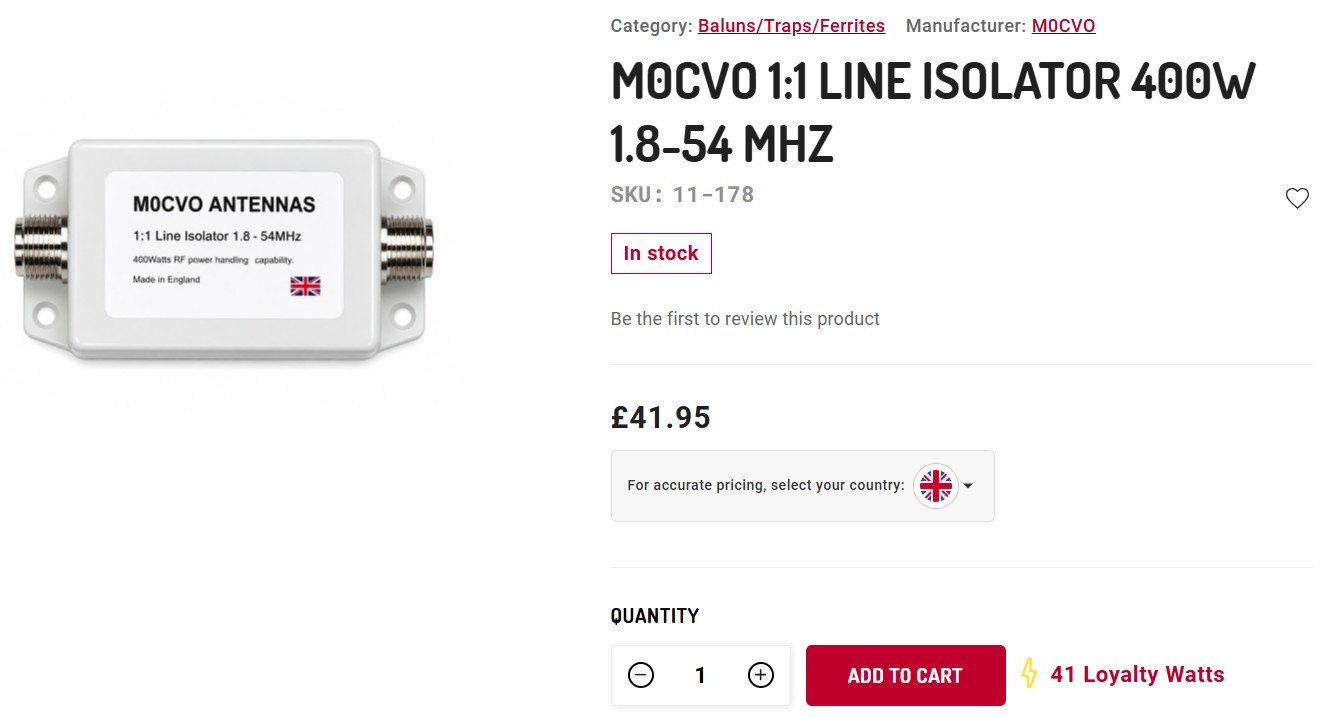
When feeding a vertical antenna like this, you should place a line isolator right at the feedpoint end of the coax.
Why? Because without it, common mode current can flow down the outside of the coax braid. When that happens, the feedline itself starts becoming part of the antenna system. The result is all sorts of nonsense:
- Odd VSWR readings
- Inconsistent tuning
- Strange changes when the coax is moved
- Confusion over what the antenna is really doing
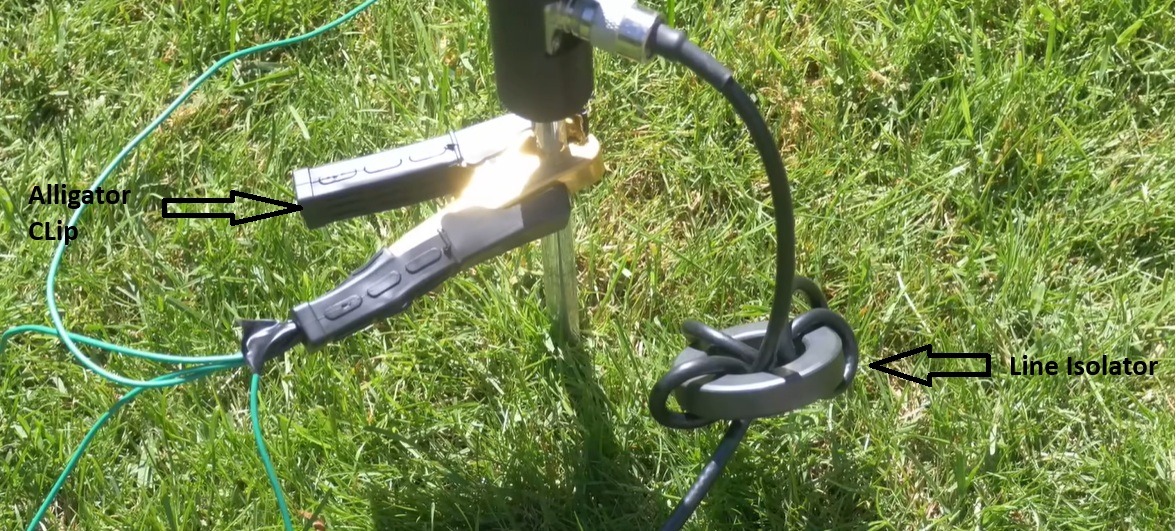
A good line isolator at the base helps stop that.
The one used here was built on an FT240-43 ferrite core (small, medium, large) with about four or five turns, suitable for 20 metres and above. It was not pretty, but it did the job. Antennas do not care whether something looks elegant. They care whether it works.
Check out our range of Antenna Analysers:
-
 RigExpert Match Antenna Analyser (0.1-70MHz Upgradeable to 500MHz)Special Price £279.95 Regular Price £329.95
 -
 RigExpert Stick 230 (0.01-230MHz) AnalyserSpecial Price £275.00 Regular Price £299.95
 -
 RigExpert Stick XPro (0.1 - 1150MHz) AnalyserSpecial Price £449.95 Regular Price £499.95
 -
 RigExpert Stick 500 (0.1-500MHz) AnalyserSpecial Price £319.95 Regular Price £399.95
 -
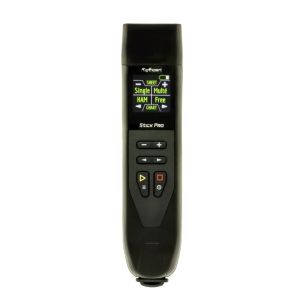 RigExpert Stick Pro (0.1-600MHz) AnalyserSpecial Price £399.95 Regular Price £419.95
 -
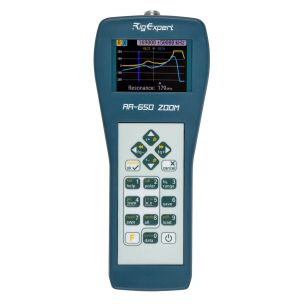 RigExpert AA-650 ZOOM (0.01-650MHz) AnalyserSpecial Price £550.00 Regular Price £679.95
 -
 RigExpert AA-1500 ZOOM (0.01-1500MHz) AnalyserSpecial Price £849.95 Regular Price £899.95
 -
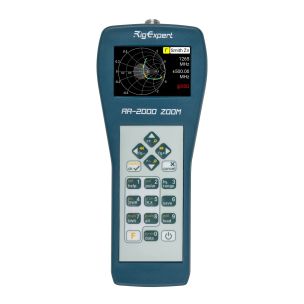 RigExpert AA-2000 ZOOM (0.01-2000MHz) AnalyserSpecial Price £999.95 Regular Price £1,099.95
 -
 RigExpert - Match Analyser License (Full Upgrade to RFE) (500Mhz)Special Price £149.95 Regular Price £179.95
 -
 RigExpert - Match Analyser License (Upgrade Basic to Advance) (230Mhz)Special Price £69.95 Regular Price £89.95


Checking the resonance and VSWR
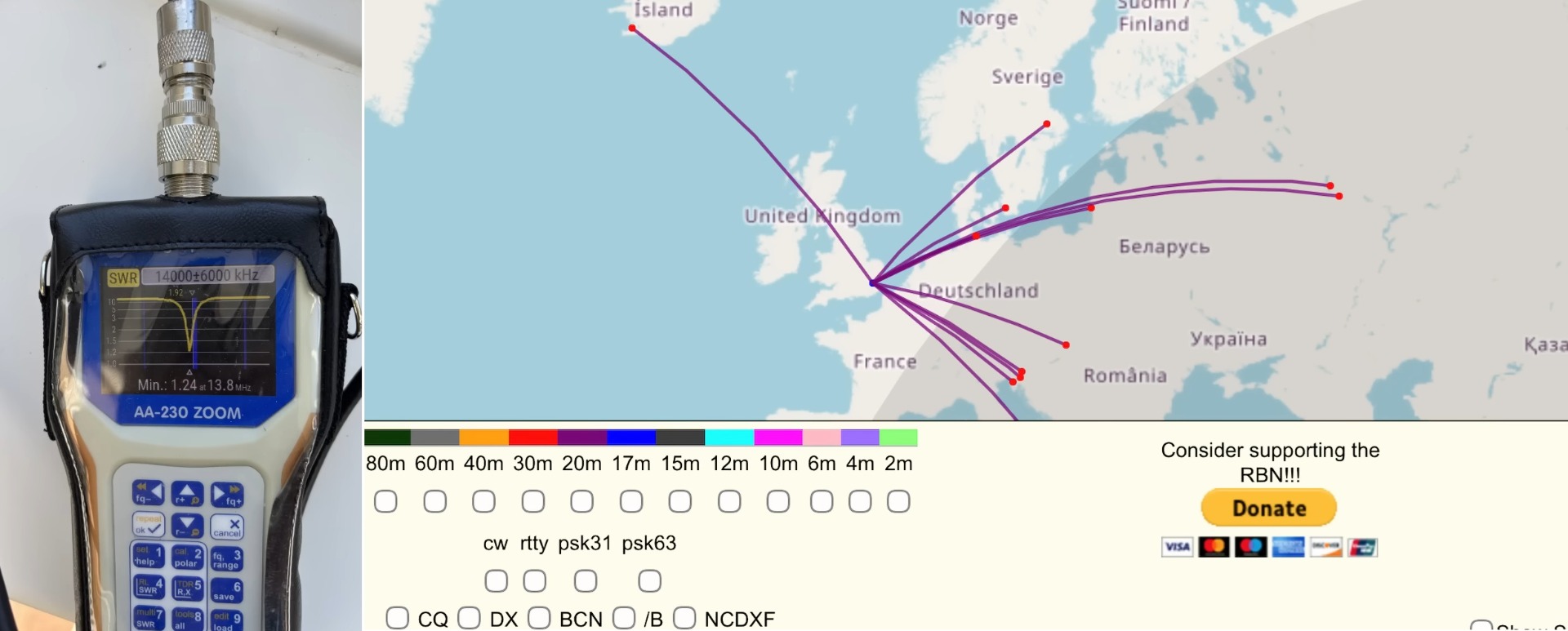
Before putting any signal on the air, the antenna was checked with an analyser.
The result showed resonance just slightly below the desired 20-metre frequency range, which indicated that the whip was a touch too long. That is exactly what you would expect from a whip that needs a small amount of final trimming or adjustment.
Even so, the VSWR was very good, which was an encouraging sign. The general behaviour of the antenna suggested that the concept was sound.
That is an important point in any antenna project. A tidy impedance curve and a sensible resonance point do not guarantee brilliant performance, but they do tell you that the antenna is fundamentally behaving as intended.
How to test a compact antenna properly
There are many ways to evaluate an antenna, but for quick, practical comparisons it is hard to beat the Reverse Beacon Network.
It gives near-instant feedback on where your signal has been heard and how far above the local noise floor it arrived. For low-power testing, especially with CW, it is extremely useful.
The method is straightforward:
- Send a short CQ or a test message on CW
- Include your callsign clearly
- Use a pre-programmed message if you do not want replies
- Check Reverse Beacon Network spots for your callsign
- Compare reports and signal levels
A typical test message might simply send the word test and the callsign several times. That provides enough material for skimmers to decode and report.
Using this method with just 10 watts, the results were quite encouraging. Reports came back strongly enough to confirm that the antenna was not merely tuning up nicely on paper. It was radiating effectively in practice.
How efficient is it really?
No loaded mobile whip on a spike with a handful of radials is going to outperform a well-installed full-size quarter-wave vertical. It is important to be realistic about that.
But that does not mean it is poor.
For 20 metres, this arrangement appears to lose only around 2 to 2.5 dB compared with a full-size quarter-wave. In real operating terms, that is a very respectable result for something so compact.
It means you are making a modest sacrifice in performance in exchange for several very worthwhile benefits:
- Minimal space requirement
- Low visual impact
- Fast setup and takedown
- Low cost
- Useful portable capability
That is a trade many operators would gladly accept.
Best bands for this type of antenna
This compact backyard HF antenna makes the most sense on the higher HF bands.
It works well as a 20-metre monoband antenna, and the same general approach should also be practical for:
- 17 metres
- 15 metres
You simply use the appropriate whip for the band.
I would be much less enthusiastic about pushing this idea down to 40 metres. Once the antenna becomes very short relative to wavelength, the compromises increase sharply:
- Bandwidth becomes very narrow
- Efficiency falls
- Tuning becomes fussier
- The antenna is less rewarding overall
There is also the practical issue that for ordinary daytime work on 40 metres, a low horizontal wire is often a better antenna than a small vertical. So if 40 metres is your main target and you can possibly fit a wire, that would usually be the direction I would go.
An easy mistake with the top whip section
There is one detail that deserves a specific warning.
The upper resonator whip screws into the lower helical section. As you adjust the antenna to resonance, it can be tempting to allow a large amount of the top whip to project down into the loading coil section.
That is not a good idea.
If too much of the upper element extends into the coil, it can start to degrade the Q of the antenna and produce odd tuning behaviour. In some cases, shortening it further can even appear to move the resonance in the wrong direction, which is exactly the sort of thing that causes head-scratching in the garden.
The cure is simple. Do not allow more than about 2 to 3 centimetres of excess top section to extend into the helical loading section.
If necessary, trim the excess carefully so that only a short amount protrudes into the coil.
That one small detail can save a great deal of confusion.
Could this be left up permanently?
Possibly, yes.
As a permanent 20-metre antenna for a very small garden, this design has clear potential. It is physically modest, not particularly conspicuous, and mechanically simple. Provided the mounting is secure and the exposed parts are properly weatherproofed, it could serve as a fixed installation where a full-size antenna is impossible.
That said, one of its greatest strengths is precisely that it does not need to be permanent. It can be put up when needed and taken down again just as quickly. For many people, that is the ideal answer to restrictive space or visual concerns.
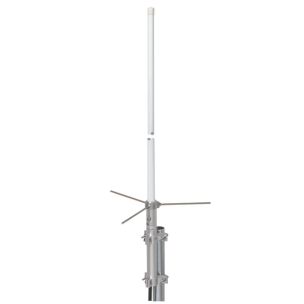
Check out our range of Vertical Antennas:
-
 Comet CHA-250HD 3.5-57MHz Base Vertical AntennaSpecial Price £249.95 Regular Price £349.95
 -
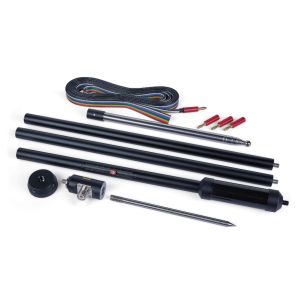 KB2 KM-01 Portable Antenna£149.95
 -
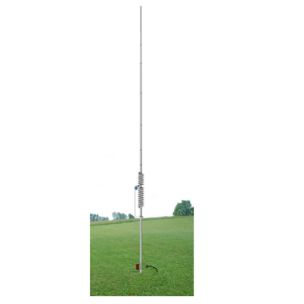 Butternut HF2V 2-Band HF Vertical AntennaSpecial Price £649.95 Regular Price £699.95
 -
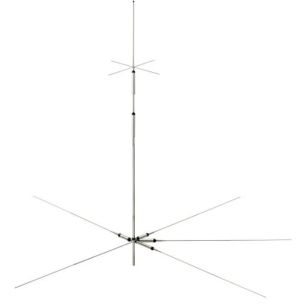 Diamond CP-5HS II 5 Band Vertical AntennaSpecial Price £349.95 Regular Price £369.95
 -
 Diamond F2409L Wireless LAN Aerial 2400-2500MHzSpecial Price £80.00 Regular Price £109.95
 -
 Diamond F2407L Wireless LAN Aerial 2400-2500MHzSpecial Price £65.00 Regular Price £89.95
 -
 Diamond F2405L Wireless LAN AerialSpecial Price £60.00 Regular Price £84.95
 -
 DIAMOND VX30N 2m/70cm Base Vertical AntennaSpecial Price £44.95 Regular Price £49.95
 -
 DIAMOND BC100 134-174MH z Base AntennaSpecial Price £59.95 Regular Price £69.95
 -
 Diamond VX-50N Vertical Antenna 2m/70cmSpecial Price £59.95 Regular Price £69.95
 -
 Sirio HGO 4G LTE 50cm - Multi Band Base Station Antenna with (50cm) CableSpecial Price £49.95 Regular Price £59.95
 -
 Diamond CP610 28MHz + 50MHz Base AntennaSpecial Price £175.00 Regular Price £229.95


Who this antenna is for
This compact vertical is especially well suited to operators who:
- Have only a tiny garden or backyard
- Need an antenna with very low visual impact
- Want a simple portable HF setup
- Operate mainly on 20 metres and above
- Are happy with monoband operation in exchange for convenience
- It is not the answer to every antenna problem. But for the right situation, it is a remarkably practical one.
Final thoughts
There is something satisfying about proving that HF operation does not require a large plot of land, towering supports, or elaborate installations.
Sometimes all you need is a modest mobile whip, a ground spike, a few radials, a proper line isolator, and a willingness to experiment.
For a tiny back yard HF antenna, this design does exactly what it set out to do. It is compact, fairly efficient, quick to deploy, easy to hide in plain sight, and entirely capable of producing solid results on 20 metres with low power.
If your garden is only a few feet deep and you have been assuming HF is out of reach, this may be the little antenna that changes your mind.
For more information please visit our online store or alternatively contact us and our team will be happy to assist you.