

VIDEO
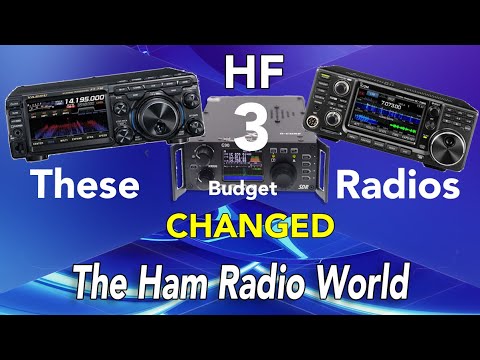
Over the last several years, three HF radios have truly transformed the landscape of HF operation for amateur radio enthusiasts. These radios, which remain in current production, have garnered significant attention for their advanced technology, excellent value, and user-friendly features. They cater to a wide range of budgets, making them accessible to many operators, whether you’re a seasoned ham or just starting out.
In this article, we’ll explore these three standout radios—the Icom IC-7300, the Yaesu FT-710, and the Xiegu G90. We’ll compare their features, performance, and pricing, and help you understand what each offers to the modern ham radio operator. Whether you’re looking for your first HF rig or considering an upgrade, this comprehensive guide will help you make an informed decision.
The Three Groundbreaking HF Radios
The three radios we’re focusing on are all software-defined radios (SDRs), a category that has revolutionised amateur radio by bringing more flexibility, better performance, and greater integration of digital technology into HF transceivers.
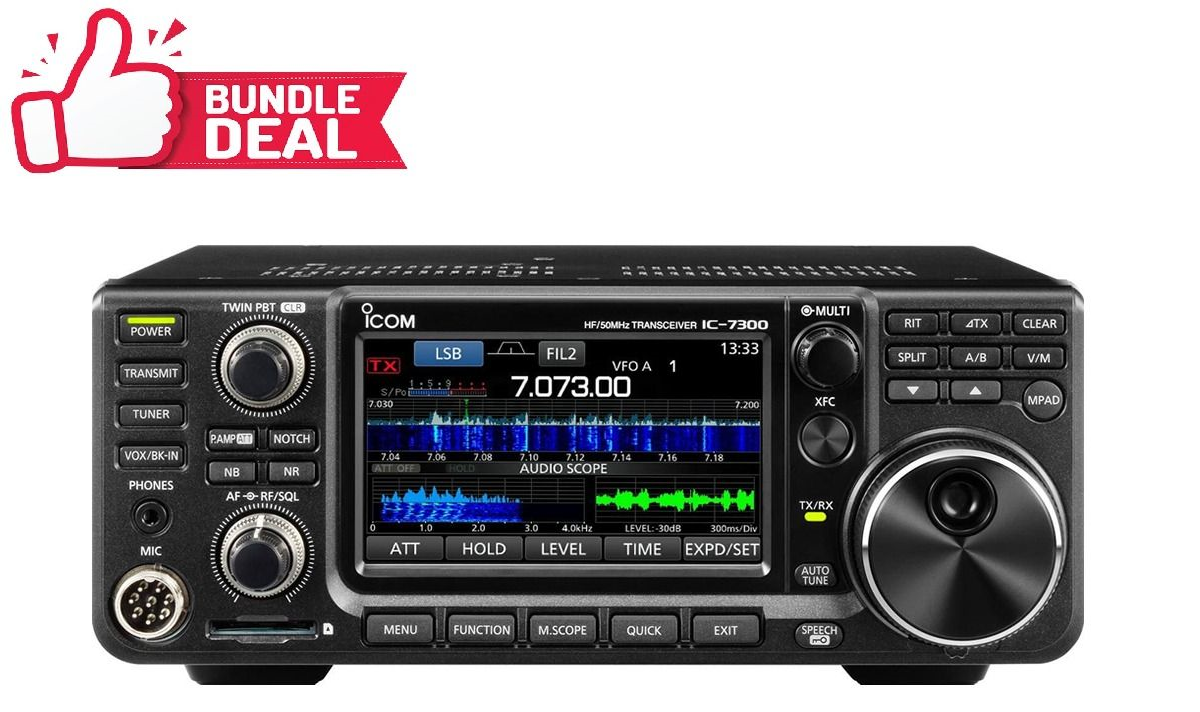
- Icom IC-7300 :
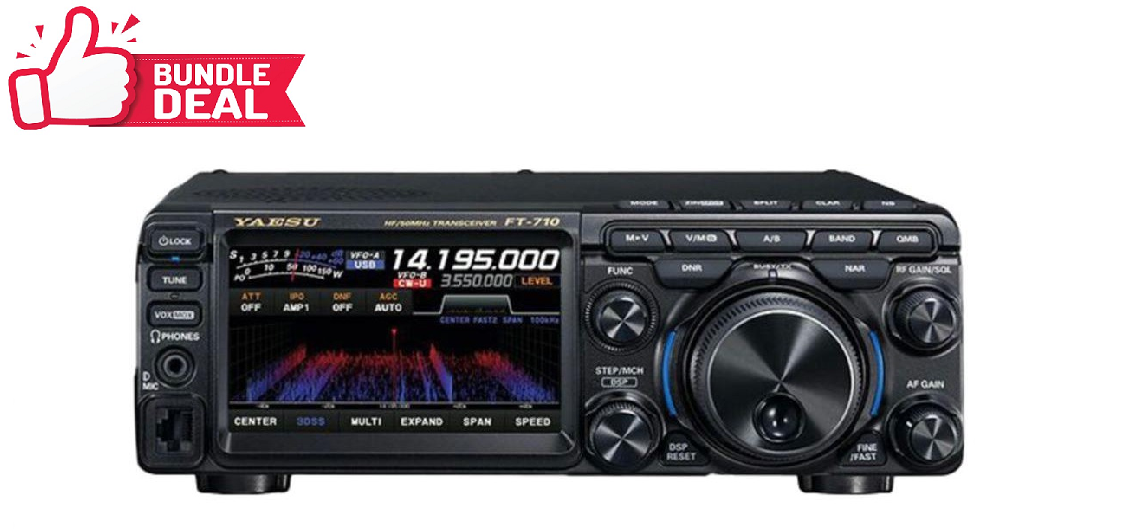
- Yaesu FT-710 :
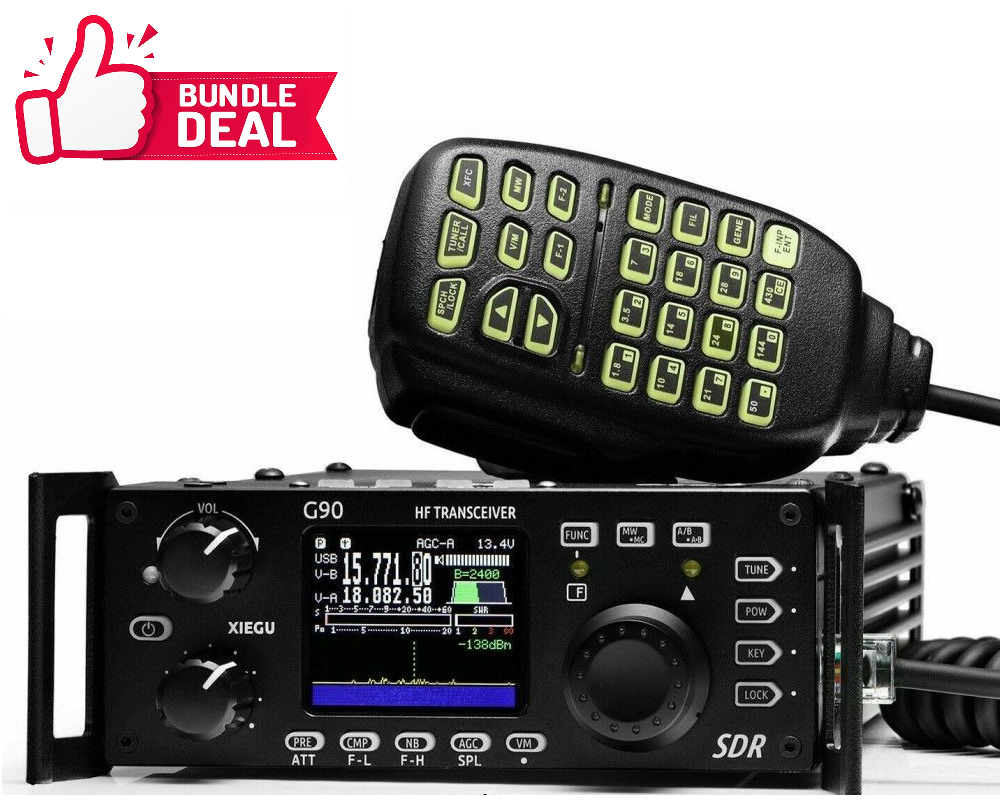
- Xiegu G90 :
Introduced in 2015 and widely available in the UK since 2016, this radio has been a game-changer for nearly a decade.
A newer entry, released in 2022, the FT-710 brings modern features and excellent value to the scene.
Released around 2020 in the UK, the G90 is a compact, portable-friendly rig that packs a punch despite its budget price.
Each of these radios brings something unique to the table, but they share common traits that have contributed to their popularity: affordability, solid build quality, and comprehensive HF band coverage.
Common Features of the IC-7300, FT-710, and G90
One of the standout characteristics of all three radios is that they are SDRs. This means they use digital signal processing technology to deliver cleaner reception, better filtering, and more flexible operation than traditional analogue radios. Additionally, all three cover the essential HF amateur bands, with some notable extras:
- Icom IC-7300
- Yaesu FT-710
- Xiegu G90
Was pioneering in adding 4-metre band coverage alongside the 6-metre band, providing expanded VHF options.
Includes 4-metre coverage, making it versatile for those interested in both HF and VHF.
Covers 160 metres through 10 metres, making it a true HF rig, though at a lower power output of 20 watts compared to the 100 watts of the IC-7300 and FT-710.
Another key shared feature is the inclusion of internal antenna tuning units (ATUs) or matching units. This is especially handy for operators using antennas with less-than-ideal VSWR (Voltage Standing Wave Ratio) characteristics, such as half-size G5RV antennas, where VSWR can vary widely across bands. The internal ATUs allow these radios to handle modest mismatches without issue, which is a great convenience whether you’re operating from a fixed station or portable setup.
Reliability and Build Quality
Reliability is a critical factor when investing in a radio transceiver, and all three of these models have proven to be dependable performers. The IC-7300 has been on the market for nearly a decade and boasts a solid track record with very few reported issues. Minor quirks such as occasional pixel faults on the display have been rare and easily remedied under warranty.
The Yaesu FT-710, while newer, has quickly built a reputation for robust performance and reliability. Users report consistent operation without significant faults, making it a trustworthy choice for both newcomers and experienced hams.
As for the Xiegu G90, I have personally owned one for several years and can attest to its durability and consistent performance. Despite being a budget radio, it has stood the test of time and remains fully functional with no problems.
Receiver Performance: Sensitivity and Noise
Modern SDR technology means all three radios offer excellent receiver sensitivity and selectivity. In practical terms, most operators will find little difference in the fundamental receiver performance among these three radios. However, there are subtle distinctions worth noting.
In my experience, the Yaesu FT-710’s receiver stands out for being notably quieter. When I swapped my IC-7300 out for the FT-710 on the bench, I immediately noticed a reduction in background noise, resulting in a cleaner listening experience. This observation aligns with the Sherwood Engineering receiver performance reports, which rank the FT-710 favorably.
That said, the IC-7300 remains a very capable receiver. If you’re already an Icom fan, you won’t be disappointed with its performance. The G90 also holds its own, offering solid receiver sensitivity that competes well within its class, especially given its lower power output.
User Interface and Menu Systems
When it comes to usability, the three radios take different approaches to menu navigation and control layout.
- Icom IC-7300
- Yaesu FT-710
- Xiegu G90
The IC-7300 features a large, bright display with a clear, hierarchical menu system. Menus and submenus are easy to scroll through, with large, legible text and intuitive organization. This design makes accessing settings and adjustments straightforward, even for complex parameters.
One of the advantages of the IC-7300 is the quick access to commonly adjusted settings such as power level and CW speed (words per minute). These controls are readily available on the side of the screen, making on-the-fly adjustments easy during operation.
The FT-710 takes a different route by attempting to display many important menu items simultaneously on the screen. This design means you might need to scan across the screen to find the option you want, which can take some getting used to.
Changing settings such as power level or CW speed requires opening the menu and selecting the relevant item, which is slightly less immediate than the IC-7300 interface. However, once familiar with the layout, the system works well.
A particularly welcome feature of the FT-710 is its ability to connect to an external display. For operators with vision challenges, like myself, this is a game-changer. Plugging in a larger monitor makes reading the screen and navigating menus much easier, greatly enhancing usability.
The G90’s menu system is straightforward and user-friendly, designed with portability and simplicity in mind. Buttons are clearly labelled, and essential functions are quickly accessible. However, the display itself is small, which may pose challenges for operators with poor eyesight, though this can be mitigated with reading glasses or a magnifying aid.
Despite its compact size, the G90’s screen packs a lot of information into a small space, including a panoramic spectrum display covering approximately 24 kHz. This is quite reasonable for a budget portable rig.
Antenna Tuning and Matching Capabilities
When comparing the internal antenna tuning units, the IC-7300’s ATU is competent but somewhat less flexible than those in the FT-710 and G90.
While the IC-7300 can handle typical mismatches from antennas such as full-size or half-size G5RVs, it struggles a little more with higher VSWR scenarios. It does feature an "emergency mode," which reduces power output to 50 watts and allows it to handle higher VSWRs more effectively, but this is a workaround rather than a full solution.
By contrast, both the Yaesu FT-710 and Xiegu G90 are remarkably capable of tuning difficult loads. For example, I was able to get the FT-710 to match a half-size G5RV antenna on 80 metres, despite the antenna not being optimally resonant on that band. The G90 performed equally well in similar conditions, showing impressive agility in its antenna matching.
Physical Design and Portability
All three radios are designed with compact front panels, requiring efficient use of space for controls and displays. While this means buttons can seem a bit cramped initially, operators quickly adapt.
The IC-7300 and FT-710 are more traditional base station transceivers, with the FT-710 Field version including a convenient carrying handle for portability. The G90 is explicitly designed for portable work, with a smaller footprint and lighter weight, making it ideal for field operations.
Regarding audio, the IC-7300 and FT-710 feature larger, higher-quality internal speakers, resulting in clearer sound when operating without external speakers. The G90’s built-in speaker is understandably smaller and less powerful given the radio’s size but remains serviceable. External speakers can be added to all three radios for improved audio quality.
Missing Features and Room for Improvement
While these radios offer excellent value, there are a few features that might be considered missing, especially compared to higher-end transceivers.
- Second Antenna Input (Receive Only):
- Advanced Receiver Features:
- Programming and Customization:
Neither the IC-7300 nor the FT-710 has a dedicated second antenna input for receive-only antennas. This feature is useful for noise reduction strategies where a separate receive antenna can be employed. The IC-7300 had a kit available at one time, but it's unclear if it remains available.
More expensive radios often include enhanced noise reduction, adaptive filtering, and more versatile selectivity options, which are less prominent or absent in these models.
The ability to deeply program buttons, macros, and other operational parameters is generally more limited in these radios compared to flagship models.
Despite these limitations, for most operators, these radios offer a compelling balance of performance, features, and price.
Pricing and Value for Money
One of the most compelling reasons these three radios have gained such popularity is their affordability, especially given the features they pack.
- Icom IC-7300:
- Yaesu FT-710:
- Xiegu G90:
Currently available for around £999 in the UK, this price represents a significant saving from earlier years. Notably, this package often comes bundled with a quality power supply, adding further value.
The FT-710 Field version is priced attractively at around £899 and includes a free 30-amp power supply and a genuine Yaesu microphone. The slightly more expensive FT-710 AESS model adds a front-facing speaker and other refinements. Both models represent excellent value.
At just £399, the G90 is an absolute bargain. It offers all-mode operation from 160 to 10 metres, a built-in ATU, and portable-friendly design, making it a fantastic entry-level or secondary rig.
Part-exchange deals at retailers can further reduce the cost, making these radios accessible to a broad audience.
Sales Success and Community Endorsement
The widespread adoption of these radios speaks volumes about their quality and appeal. The Icom IC-7300 alone has sold over 100,000 units worldwide, making it one of the fastest-selling transceivers in recent years. Its introduction truly changed the face of HF operation for many operators.
The Yaesu FT-710, despite being a later arrival, has seen strong sales growth as more hams discover its capabilities and value. The G90 also enjoys a solid user base, especially among those seeking a portable, budget-friendly transceiver.
In amateur radio, word of mouth is a powerful endorsement. Many operators choose their rigs based on recommendations from trusted peers, and these three models consistently receive positive feedback for reliability, performance, and ease of use.
Supporting the Hobby and Looking Ahead
Beyond just selling radios, there are exciting developments within the amateur radio community that these radios can support. For example, the Radio Society of Great Britain (RSGB) is organising balloon launches using LoRa (Long Range Wide Area Network) technology on the 70 cm band. These events encourage experimentation and innovation, and radios like the IC-7300 and FT-710 with their wide band coverage and advanced features can be valuable tools for participation.
As the hobby continues to evolve, having a reliable, versatile transceiver that supports both traditional HF modes and newer digital technologies will be increasingly important.
Final Thoughts: Choosing the Right Radio for You
Ultimately, the choice among these three radios comes down to your personal preferences, operating style, and budget.
- If you value a large, easy-to-navigate display, quick access to common controls, and proven reliability, the Icom IC-7300 remains a standout choice.
- The Yaesu FT-710 offers a quieter receiver, the convenience of external display connectivity, and excellent matching capabilities, making it a great option for those who want modern features at a competitive price.
- For operators prioritising portability, budget, and all-mode HF coverage, the Xiegu G90 delivers remarkable value without sacrificing essential performance.
As a ham radio operator, you might also consider brand loyalty or the community around each manufacturer, which can influence your experience. But rest assured, all three radios have earned their place in the market by delivering solid performance and reliability.
Whichever radio you choose, these models have undoubtedly changed the face of HF amateur radio operation by making advanced SDR technology accessible to a wider audience than ever before.
Where to Find These Radios
If you’re interested in exploring these radios further, various retailers offer attractive bundles that include power supplies and microphones, adding even more value to your purchase. Here are some useful links to current deals:

For calculating antenna feedline losses and VSWR, the VSWR Loss Calculator is an excellent resource to help optimise your station setup.
Enjoy Your Ham Radio Journey
These three radios represent a fantastic entry point or upgrade path for many amateur radio enthusiasts. They combine modern SDR technology, solid performance, and great value, helping to keep the spirit of ham radio alive and vibrant.
Whether you’re calling CQ on the bands, experimenting with digital modes, or exploring portable operation, these radios will serve you well for years to come. Embrace the technology, enjoy the community, and keep exploring the fascinating world of amateur radio.
Happy operating!
For more information please visit our online store or alternatively contact us, and our team will be happy to assist you!